Why Should You Use Different Cutting Boards for Food?

Time:2026-10-19 Author:Charlotte
0%

Why should you use different cutting boards for food? The answer begins with an invisible risk: cross-contamination. A board may look spotless while carrying juices from raw chicken, seafood, or beef. Those liquids can reach salad leaves, sliced fruit, or bread within seconds. No dramatic warning appears.

The Centers for Disease Control and Prevention estimates that foodborne illness affects about 48 million Americans annually. Approximately 128,000 people are hospitalized, and 3,000 die. These figures explain why small kitchen habits deserve serious attention. The USDA Food Safety and Inspection Service recommends using separate cutting boards for raw meat, poultry, seafood, and ready-to-eat foods. The FDA Food Code also supports separating equipment and preventing contact between raw and cooked ingredients.

Dr. Benjamin Chapman, a food-safety researcher at North Carolina State University, explains, “The big thing is to make sure you’re not putting ready-to-eat foods on surfaces that have had raw foods on them.” That principle is simple. Kitchens are not laboratories. People rush, boards slide, and knife grooves hold residue. I have also assumed that hot water and soap solved everything. That assumption deserves questioning. A dedicated meat board, a separate produce board, and careful washing create visible boundaries. Color coding helps when dinner becomes hectic. Still, separate boards are not a complete safety system. Clean hands, sanitized counters, proper cooking, and refrigeration remain essential. This guide examines the practical evidence behind the habit, including board materials, cleaning methods, storage, and the mistakes that even careful home cooks can make.
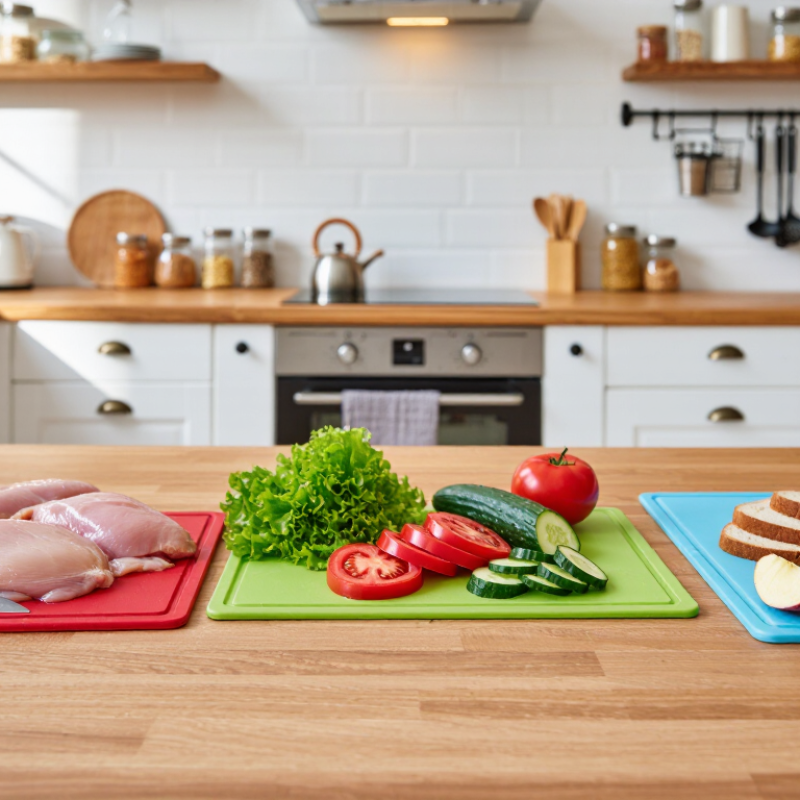
Why Should You Use Different Cutting Boards for Food?

Food Contamination Risks in Shared Cutting Boards

A shared cutting board can quietly move harmful bacteria from one food to another. Raw chicken juices may remain in small knife grooves, even after a quick rinse. If lettuce is chopped there next, the contamination can reach food eaten without cooking.

Food safety guidance recommends using separate boards for raw meat, seafood, and ready-to-eat foods. Color coding can help, but the material and condition matter more than appearance. A board with deep scratches is difficult to clean thoroughly. Wash each board with hot, soapy water after use, then let it dry completely. Moist surfaces allow microbes to survive longer.

I used to use one board for everything. It seemed practical, but the routine depended too much on memory. One rushed evening, I cut vegetables immediately after preparing raw poultry. I cleaned the board afterward, yet I could not prove that every groove was safe. That uncertainty changed my habits. Now, I keep raw ingredients on one board and fresh produce on another. The system takes extra storage space. It also creates more washing. Still, separating tasks reduces avoidable contact between raw juices and ready-to-eat foods. Keep boards stable, replace badly damaged ones, and wash your hands before touching clean ingredients. Some kitchens may need a better system.

How Different Foods Spread Bacteria During Preparation

Why Should You Use Different Cutting Boards for Food?

A cutting board can look clean while carrying invisible bacteria. Raw chicken may release juices containing Salmonella or Campylobacter. Those juices can spread across the board and onto a knife handle. If lettuce or fruit touches the same surface afterward, there is no cooking step to remove the bacteria. Separate boards reduce this cross-contamination risk. They create a clear boundary between raw ingredients and ready-to-eat food.

Different foods spread bacteria in different ways. Raw meat and seafood leave moisture behind, especially near board edges and knife cuts. Unwashed produce can transfer soil and microbes from its skin. A cucumber may seem harmless, yet its outer surface can contaminate a peeled slice. Hands, cloth towels, and nearby containers can continue the spread. Small details matter.

At home, I use one board for raw animal foods and another for vegetables, bread, and fruit. After preparing raw meat, I wash the board with hot, soapy water, rinse it, and let it dry completely. A food-safe sanitizer may provide extra protection when appropriate. I once reused a board too quickly because it looked dry. That was careless. Deep grooves also deserve attention because bacteria can remain inside them. Replacing a badly damaged board is safer than trusting its appearance.

Choosing Cutting Boards for Meat, Produce, and Ready-to-Eat Foods

Why Should You Use Different Cutting Boards for Food?

Choosing separate cutting boards for meat, produce, and ready-to-eat foods is a practical barrier against cross-contamination. Raw chicken can leave invisible pathogens on a board, even after the surface looks clean. The CDC estimates that about 48 million people in the United States experience foodborne illness each year. Around 128,000 require hospitalization, and approximately 3,000 die. These figures show why a small kitchen habit deserves serious attention.

48 million
people in the United States experience foodborne illness each year.
128,000
require hospitalization.
3,000
die.

Use one board for raw meat, poultry, and seafood. Keep another for vegetables and fruit. A third board works well for cooked foods, bread, and salad ingredients. This system follows USDA FSIS guidance to separate raw foods from ready-to-eat items. Choose boards that are smooth, durable, nonabsorbent, and easy to clean, as recommended by the FDA Food Code 2022. After cutting raw meat, wash the board with hot, soapy water, then sanitize it according to product directions.

Keep it simple. Labeling helps.

In my own kitchen, I once used the produce board for sliced roast chicken because the “clean” board was still wet. That shortcut felt harmless. It was not a perfect system, either. Boards can develop deep knife grooves that trap residue, so inspection matters more than appearance alone. Replace a board when cracks, stains, or persistent odors remain after thorough cleaning. Dedicated boards reduce mistakes, but they cannot replace handwashing, clean knives, and careful storage.

Proper Cleaning and Maintenance of Each Cutting Board

Why Should You Use Different Cutting Boards for Food?

Proper Cleaning and Maintenance of Each Cutting Board

Using separate cutting boards reduces the chance of transferring raw meat juices to ready-to-eat foods. I keep one board for meat and seafood, and another for vegetables, fruit, and bread. Different surfaces also wear differently. A board used for raw meat often develops deep knife grooves faster.

Clean the board immediately after use. Wash it with hot water and dish soap, then rinse it thoroughly. A damp cloth is not enough. For raw meat, apply a food-safe sanitizing solution according to its label directions. Never mix cleaning chemicals. Let the board air-dry completely, preferably standing upright. Trapped moisture can create unpleasant odors and support microbial growth.

Wooden boards need gentler care. Do not soak them or leave them beside a wet sink. Wipe them dry and apply food-grade mineral oil when the surface looks pale or feels rough. Plastic boards can often go in a dishwasher, but check their care instructions first. Replace any board with deep cracks, stubborn stains, or grooves that remain dirty after washing.

I once stored a damp wooden board flat, and it slowly warped. That mistake changed my routine. Bread boards mainly collect crumbs, so brushing them clean and wiping them with a lightly damp cloth may be enough. Still, every board deserves regular inspection. Clean habits are important, but damaged surfaces can quietly defeat them.

When to Replace a Cutting Board for Safer Food Preparation

Why Should You Use Different Cutting Boards for Food?

When to Replace a Cutting Board for Safer Food Preparation

Using separate cutting boards can reduce cross-contamination during meal preparation. I keep one board for raw meat and seafood, and another for vegetables and bread. Raw juices can enter tiny cuts, then spread onto foods eaten without cooking. That matters. Wash each board with hot, soapy water after use, and let it dry completely. Food safety professionals also recommend sanitizing boards regularly, especially after preparing poultry or seafood.

Replacement depends more on condition than age. Deep grooves can trap bacteria and food residue, even after careful washing. Replace the board when knife marks feel rough under your fingers. Cracks, splits, warping, or loose edges also create hard-to-clean spaces. Persistent odors deserve attention. A board should not smell sour after washing and drying. Small cracks count.

I once kept a plastic board because it still looked presentable. Later, I noticed several dark cuts near the center. That was a mistake. Appearance is not a reliable safety test. Plastic boards may develop deep scars, while wooden boards can split when they stay wet or dry unevenly. A board with mold, severe staining, or damage should be discarded. Do not wait for visible mold. If you cannot clean every surface thoroughly, replace it. Regular inspection takes less than a minute. My own habit is checking boards before grocery preparation, although I sometimes forget.

FAQS

Why should different foods use different cutting boards?

Separate boards create a barrier between raw foods and ready-to-eat ingredients. Raw chicken juices can reach lettuce, fruit, knives, and handles. Appearance can mislead.

Which foods need a separate cutting board?

Use one board for raw meat, poultry, and seafood. Use another for vegetables, fruit, bread, and cooked foods. This reduces cross-contamination.

Can unwashed produce contaminate a cutting board?

Yes. Soil and microbes on a cucumber’s skin can reach peeled slices. Wash produce before cutting, and clean the board afterward.

How should I clean a board after preparing raw meat?

Wash it immediately with hot water and dish soap. Rinse thoroughly, then use a suitable food-safe sanitizer as directed. Let it air-dry completely.

Is wiping a board with a damp cloth enough?

No. A damp cloth may spread residue instead of removing it. Hands, towels, and nearby containers can also transfer bacteria.

How should wooden and plastic boards be maintained?

Do not soak wooden boards or leave them beside a wet sink. Dry them upright, and apply food-grade mineral oil when the wood feels rough. Check plastic board instructions before using a dishwasher.

When should a cutting board be replaced?

Replace it when deep cracks, stubborn stains, strong odors, or dirty grooves remain. A smooth-looking surface is not always safe. I once trusted appearance too much.

Can separate boards replace handwashing and clean knives?

No. Dedicated boards reduce mistakes, but handwashing and clean knives remain necessary. Store boards dry, inspect them regularly, and avoid rushing the routine.

Conclusion

Why should you use different cutting boards for food? Using separate boards for raw meat, seafood, fresh produce, and ready-to-eat foods helps reduce the risk of cross-contamination during meal preparation. Raw ingredients may carry bacteria that can transfer to foods served without further cooking, while fruits, vegetables, and cooked foods can also spread residues or microorganisms across a shared surface. Assigning each board to a specific food category creates a safer and more organized preparation routine.

Each cutting board should be washed thoroughly with hot, soapy water after use and dried completely to discourage bacterial growth. Boards used for raw meat and seafood may require especially careful cleaning, while boards for produce and ready-to-eat foods should be kept separate and sanitary. Regularly inspect every board for deep grooves, cracks, or difficult-to-clean stains. Replacing damaged boards promptly helps maintain a cleaner food preparation environment and supports safer everyday cooking.

Charlotte

Charlotte

Charlotte is a seasoned marketing professional with a deep understanding of the company's portfolio and a passion for elevating its presence in the market. With a keen eye for detail and a commitment to excellence, she ensures that our professional blog is regularly updated with insightful articles......