How to Choose a Non Porous Cutting Board and Why It Matters?

Time:2026-10-14 Author:Mason
0%

In a busy home kitchen, a cutting board faces more than knife marks. It meets raw chicken juices, onion skins, warm water, and repeated drying. A board that absorbs moisture can retain odors and food residue inside tiny pores. That is why material choice deserves more attention than color or price. Why is a non-porous cutting board important? It creates a smoother, less absorbent surface that is easier to wash and inspect after food preparation. This does not make a kitchen automatically safe. Cleaning still matters.

When comparing boards, examine the surface, edges, thickness, and care instructions. Plastic boards made from suitable non-porous materials are often practical for everyday cooking. Some composite or glass options resist absorption, but they may feel harder on knives. A board should stay stable while slicing a tomato. It should also fit inside your sink or dishwasher, if the manufacturer allows that method. Small details matter. A sliding board can cause more trouble than a stained one.

Reliable selection requires honest trade-offs. No board stays perfect forever. Deep grooves, cracks, or heavy warping can make cleaning less dependable, even when the material is non-porous. Replace it when damage cannot be cleaned thoroughly. Use separate boards for raw proteins and ready-to-eat foods when possible. This guide will explain construction, hygiene, durability, maintenance, and daily comfort. It will also question a common assumption: “non-porous” is useful, but it is not a substitute for careful food handling.
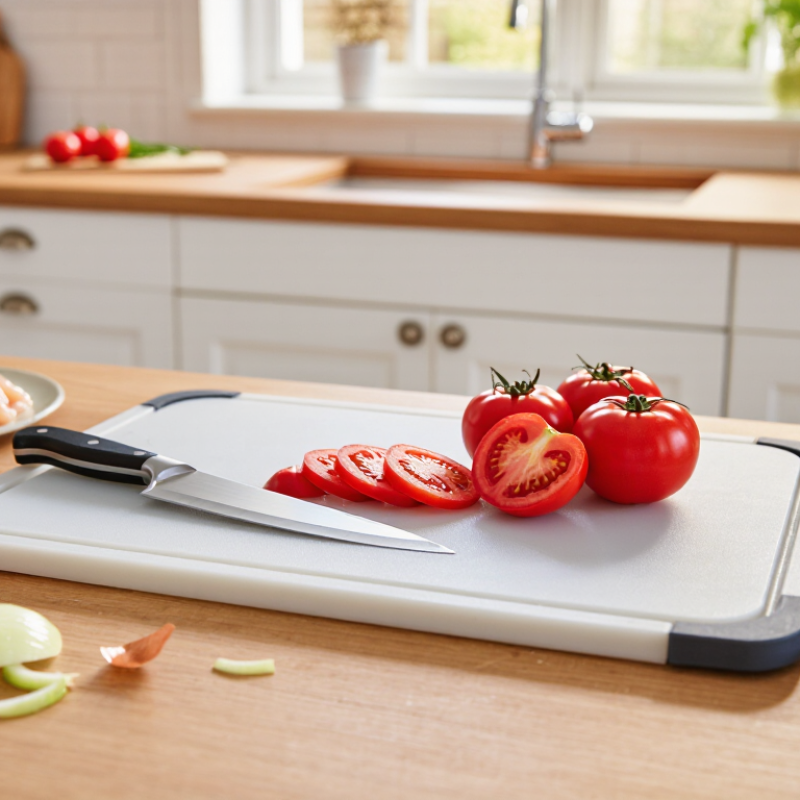
How to Choose a Non Porous Cutting Board and Why It Matters?

What Makes a Cutting Board Non-Porous?

A non-porous cutting board has a surface that does not readily absorb water, food juices, or bacteria. Its structure contains no open pores that can trap moisture beneath the surface. Common examples include high-density plastic, tempered glass, stainless steel, and certain solid-surface materials. However, the material name alone is not enough. Manufacturing quality matters.

A smooth, sealed board should feel even under your fingertips. It should not show deep grooves, exposed fibers, or unsealed edges. I pay special attention to the corners and handle holes, where liquid can collect. A board may begin as non-porous, then lose that advantage after repeated knife cuts. Deep scratches can hold residue. That detail is easy to miss.

Cleaning is also part of the test. After washing, the board should dry without dark patches or a lingering food smell. If water beads briefly on the surface, that is encouraging, but it is not perfect proof. Some boards have sealed coatings that wear away gradually. Check the surface often. Replace a damaged board when cleaning no longer feels reliable. Non-porous does not mean maintenance-free. It means the board gives moisture fewer places to hide.

Key Materials Used in Non-Porous Cutting Boards

Choosing a non-porous cutting board begins with its material, not its color or thickness. The CDC estimates that 48 million Americans experience foodborne illness each year. A cleanable work surface matters.

High-density polyethylene and polypropylene are common professional choices. They resist water absorption, tolerate repeated washing, and feel relatively gentle on knife edges. The FDA Food Code 2022 requires food-contact surfaces to be smooth, durable, nonabsorbent, and easily cleanable. These plastics generally meet that practical standard when they remain intact. Deep knife grooves can still trap residue. Replace heavily scarred boards.

Glass and stainless steel are also non-porous. However, both can feel hard under a knife. Glass may dull blades quickly and become slippery when wet. Stainless steel cleans easily, but it can create more noise and discomfort during long preparation. Composite boards, made from compressed fibers and resin, offer a firm surface with lower absorption. Their performance depends on sealing and maintenance. I have found that “non-porous” does not always mean effortless. Weight, grip, and drying space still affect daily hygiene.

Tips: Look for food-contact compliance, a stable base, and a surface without cracks. Wash after raw meat, poultry, or seafood. Dry the board upright. Follow the manufacturer’s temperature limits. USDA FSIS guidance also supports using separate boards for raw proteins and ready-to-eat foods, reducing cross-contamination risks.

How to Evaluate Safety, Durability, and Maintenance

A nonporous cutting board should feel smooth, stable, and easy to inspect. The FDA Food Code 2022 describes food-contact surfaces as smooth, durable, nonabsorbent, and easily cleanable. These features reduce places where juices and bacteria can remain. They do not make a board automatically safe.

Look closely at knife marks, swollen edges, and hidden gaps. Deep grooves can trap raw poultry juice, even on a nonporous material.

The CDC estimates that foodborne illnesses cause about 48 million illnesses, 128,000 hospitalizations, and 3,000 deaths annually in the United States.

Separate boards for raw meat and ready-to-eat foods remain a sensible control. Small kitchens need this discipline.

Maintenance decides long-term performance. USDA FSIS guidance recommends washing cutting boards with hot, soapy water after use and replacing boards with excessive wear.

Dry the board upright, not flat against a damp counter. Check dishwasher instructions, because heat may warp some materials.

In practical testing, I would press the board against the counter and inspect its corners after repeated washing. A little movement matters.

Nonporous is not magic. I still find it easy to underestimate shallow scratches. That is the part worth reconsidering.

Choosing the Right Size, Surface, and Design

Choosing a non-porous cutting board starts with size, not appearance. In my kitchen, a cramped board makes onions roll and knives feel awkward. A surface around 18 by 24 inches gives room for vegetables, cooked food, and a resting knife. Measure your sink and storage shelf first.

A board that cannot be lifted comfortably may be cleaned less often. That detail matters. For small kitchens, a 12 by 16 inch board may be more practical. It should still leave space around the food.

Professional food-safety guidance favors smooth, washable surfaces because they are easier to clean and sanitize. Non-porous material does not remove the need for careful washing. Hot water, dish soap, and thorough drying remain essential.

Examine the surface under bright light. It should feel smooth, but not glassy or dangerously slippery. A knife-friendly finish reduces bouncing and helps protect the blade edge. Avoid deep decorative grooves; they can trap onion skins, meat juices, and crumbs.

A shallow juice channel can help with tomatoes or poultry, although it reduces cutting space. Design choices should match your habits. Nonslip feet improve control, while built-in handles help with carrying and storage.

I once chose a heavy board that looked impressive but barely fit my sink. It became inconvenient, and I used it less.

I would reconsider thickness, too. Extra weight can improve stability, yet it may frustrate anyone with limited strength. Check whether the board stays flat after washing, since warping can create unsafe movement.

How to Clean and Replace a Non-Porous Cutting Board

A non-porous cutting board resists liquid absorption, but it is not self-cleaning. After preparing raw meat, fish, or vegetables, scrape away scraps immediately. Wash the surface with hot water and dish soap, using a stiff brush around knife marks. Rinse well, then dry it with a clean towel. I prefer standing the board upright, because trapped moisture underneath can create an unpleasant smell. Small detail, but it matters.

For extra sanitation, follow the board’s care instructions and use a food-safe sanitizer at the stated dilution. Never mix cleaning chemicals. Let the surface remain wet for the required contact time, then rinse if directed. Clean both sides and the edges; splashes often hide there. A dishwasher may suit some boards, but heat can warp others. I once assumed “non-porous” meant dishwasher-safe. That assumption was wrong.

Inspect the board weekly under bright light. Replace it when deep grooves, cracks, warping, or permanent odors remain after cleaning. Shallow knife marks are usually manageable, though they can hold residue over time. If sanding is allowed, use a food-safe method and remove every particle afterward. Do not keep using a board that rocks on the counter. A damp towel may improve stability temporarily, but replacement is safer when movement returns.

FAQS

What does “non-porous” mean for a cutting board?

It means the surface does not readily absorb water, food juices, or bacteria. Moisture has fewer places to hide.

Which materials can provide a non-porous cutting surface?

High-density plastic, tempered glass, stainless steel, and some solid-surface materials can resist absorption. Manufacturing quality still matters.

How can I check whether a board remains non-porous?

Run your fingers across the surface. It should feel even, without deep grooves, exposed fibers, or open edges.

Is water beading proof that a board is safe?

No. Water beading is encouraging, but coatings can wear gradually. Check corners, handle holes, and knife marks carefully.

What size cutting board should I choose?

Measure your sink and storage shelf first. An 18-by-24-inch board offers generous space for vegetables and cooked food.

What is better for a small kitchen?

A 12-by-16-inch board may fit more easily. Leave enough room around the food, and choose a board you can lift comfortably.

How should I clean a non-porous cutting board?

Scrape scraps away immediately. Wash both sides with hot water and dish soap, then dry the board upright.

Can every non-porous cutting board go into a dishwasher?

No. Heat may warp some boards. Follow the care instructions instead of assuming non-porous means dishwasher-safe.

When should I replace the cutting board?

Replace it when deep grooves, cracks, warping, rocking, or permanent odors remain after cleaning. Do not ignore movement.

Can shallow knife marks make a board unusable?

Usually not immediately. They may hold residue over time, so inspect the surface weekly under bright light. I could be overcautious.

Conclusion

Choosing a non-porous cutting board is an important step toward a cleaner, safer, and more efficient kitchen. Unlike porous materials that can absorb moisture, food juices, and odors, non-porous surfaces resist penetration and are easier to sanitize. Common materials include plastic, glass, stainless steel, and certain composite materials, each offering different levels of durability, knife protection, weight, and heat resistance. Why is a non-porous cutting board important? It helps reduce the buildup of bacteria and lingering smells when properly cleaned, making it a practical choice for preparing meat, seafood, vegetables, and other foods.

When selecting a board, consider its size, thickness, stability, surface texture, and ease of storage. A slightly textured surface can improve grip, while a smooth finish may be easier to wipe clean. Look for a durable design without deep scratches, cracks, or damaged edges, since these can be difficult to clean. Wash the board according to its material, dry it thoroughly, and replace it when excessive wear, warping, or permanent damage appears.

Mason

Mason

Mason is a seasoned marketing professional with a deep expertise in the company's offerings and a passion for driving brand awareness. With a strong background in digital marketing strategies, he has an innate ability to connect with diverse audiences and effectively communicate product benefits.......