What Is the Safest Plastic for Cutting Boards?

Time:2026-09-29 Author:Amelia
0%

What Is the Safest Plastic for Cutting Boards? The answer depends on material quality, daily habits, and how well the board is maintained. Among common choices, food-grade high-density polyethylene (HDPE) and polypropylene (PP) are widely trusted. They are durable, nonporous, and easier to sanitize than heavily scarred surfaces. They also resist absorbing meat juices, onion odors, and colorful stains from tomatoes.

Food-safety expert Dr. Ben Chapman has stated, “The type of cutting board is less important than how you use it.” That practical observation matters in real kitchens. A certified plastic board should be washed with hot, soapy water after cutting raw meat. It should also be sanitized when appropriate, then dried completely. Some boards can enter the dishwasher, but heat may warp thinner products. Check the manufacturer’s instructions.

Look closely.

Deep knife grooves can trap bacteria and moisture. Replace the board when those grooves remain dark after cleaning, or when the surface begins shedding small plastic fragments. A thicker HDPE board often feels steadier under a chef’s knife. A flexible PP mat may save storage space, but it can slide unless placed on a damp towel.

So, What is the safest plastic for cutting boards? A food-grade, reputable HDPE or PP board is a strong choice when maintained correctly. Certification helps, yet labels alone cannot prevent contamination. I would not call any cutting board perfect. Cleaning habits, separation of raw and ready-to-eat foods, and timely replacement still determine much of the real-world safety.
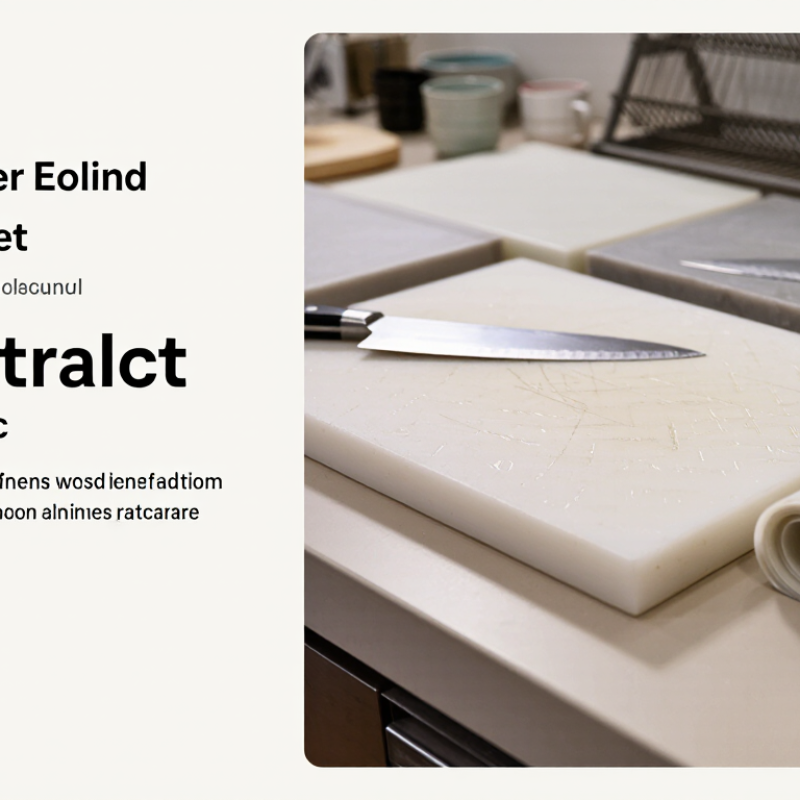
What Is the Safest Plastic for Cutting Boards?

What Makes a Plastic Cutting Board Safe?

What Is the Safest Plastic for Cutting Boards?

A safe plastic cutting board begins with its material. Food-grade high-density polyethylene and polypropylene are common choices because they are nonporous, durable, and easy to clean. They should come from a source that clearly states food-contact compliance. A vague “safe plastic” claim is not enough. I look for a smooth surface, clear care instructions, and no strong chemical odor. The safest board is also one that remains stable during daily use.

What Makes a Plastic Cutting Board Safe?

Tips: Wash the board with hot, soapy water after cutting. Dry it upright, so air can reach both sides. Use separate boards for raw meat and ready-to-eat foods. Replace the board when deep grooves trap residue. A dishwasher-safe label can help, but repeated heat may still warp some boards. Check the manufacturer’s instructions.

Small details matter. A board that slides can cause cuts, even when its plastic is food-safe. Place a damp towel underneath for better grip. Avoid using a damaged board with rough, cracked areas. I once kept a heavily scored board too long because it still looked clean. That was poor judgment. Cleaning removes surface contamination, but it cannot reliably restore deep cuts. Plastic can also shed tiny fragments when scraped aggressively, so I avoid metal tools and harsh abrasives. No material removes every kitchen risk. Good habits do much of the work.

Comparing Common Plastics Used for Cutting Boards

What Is the Safest Plastic for Cutting Boards?

Comparing Common Plastics Used for Cutting Boards

High-density polyethylene, or HDPE, and polypropylene are common choices for plastic cutting boards. Both are nonporous when new, lightweight, and generally easy to wash. Look for a board clearly labeled for food contact, and follow its care instructions. The plastic type alone cannot guarantee safety.

HDPE boards often feel firm and stable under a knife. Polypropylene boards are also durable, though their feel and stiffness vary by design. Neither material stays pristine forever. Repeated chopping leaves grooves where food residue can collect, and a board that is deeply scored, cracked, or warped is harder to clean thoroughly. Replace it when damage becomes difficult to scrub away. A quick look helps.

Some boards are advertised as dishwasher-safe, but heat tolerance depends on the product. Check the label rather than assuming every plastic board can handle a hot cycle. After cutting raw meat, wash the board with hot, soapy water and let it dry fully. Use a separate board for ready-to-eat foods when practical. That extra step may seem fussy, but it reduces the chance of transferring raw-food residue.

For most kitchens, a food-contact-rated HDPE or polypropylene board in good condition is a reasonable choice. There is no perfect plastic. A board’s cleanliness, condition, and care matter as much as its material.

Why Food-Grade HDPE Is Often the Safest Choice

Food-grade HDPE is often considered one of the safest plastics for cutting boards. It is dense, nonporous, and absorbs very little water. That makes it harder for food liquids to enter the board. It also resists many household acids, including tomato juice and vinegar. In daily kitchen use, its smooth surface feels stable under a chef’s knife. It does not usually splinter like poorly finished wood.

Safety depends on more than the plastic itself. Choose a board clearly made for food contact, with an even surface and no chemical smell. HDPE is gentler on knife edges than glass or stone. However, repeated cutting creates grooves over time. Those grooves can hold residue, especially when cleaning is rushed. Wash the board promptly with hot water and dish soap. Dry it upright, allowing air to reach both sides. Follow the manufacturer’s instructions before using a dishwasher, because heat can warp some boards.

I once assumed a board was safe simply because it looked clean. That was too casual. Deep knife marks deserve closer attention. Replace or resurface the board when cleaning becomes difficult. HDPE is not automatically perfect, either. Quality, thickness, handling, and maintenance all matter.

For raw meat, use a separate board when possible. Cross-contamination remains a greater concern than the plastic choice alone. A well-maintained food-grade HDPE board offers a practical balance of hygiene, durability, and knife protection.

Key Safety Factors: Durability, Hygiene, and Chemical Stability

For many kitchens, food-contact-grade high-density polyethylene (HDPE) or polypropylene is a sensible plastic choice. These materials are tough, relatively nonporous, and chemically stable under normal food preparation. Durability matters because a board that bends or splits can trap residue. It should also resist knife damage without becoming brittle. No plastic board lasts forever.

Hygiene depends on maintenance, not material alone. Wash the board promptly with hot water and dish detergent after cutting food. Rinse away soap, then let both sides dry completely. Deep grooves deserve attention. They can hold moisture and microscopic food particles, even when the surface looks clean. Keep separate boards for raw meat and ready-to-eat foods when possible. That habit reduces cross-contamination more reliably than choosing a fashionable material.

Chemical stability is easy to misunderstand. Food-contact certification is more useful than vague claims such as “non-toxic” or “BPA-free.” Heat, acidic foods, oils, and harsh cleaners can change how plastic performs. Follow the care instructions, and keep the board away from high heat. I once assumed a smooth board was automatically hygienic; that assumption was too simple. A board can look acceptable while carrying invisible residue. Replace it when cracks, persistent odors, deep cuts, or rough patches remain after cleaning.

How to Choose and Maintain a Safe Plastic Cutting Board

What Is the Safest Plastic for Cutting Boards?

How to Choose and Maintain a Safe Plastic Cutting Board

In a busy kitchen, I prefer a food-contact plastic board made from high-density polyethylene or polypropylene. These materials are nonporous and usually resist moisture better than wood. The safest choice is not based on color alone. Check the packaging for food-contact approval, a stable surface, and clear care instructions. A board should sit firmly on the counter. Sliding creates accidents and uneven cuts.

Use separate boards for raw meat and ready-to-eat foods. This simple habit reduces cross-contamination. After cutting, wash the board with hot water and dish soap. Scrub the corners, edges, and knife marks carefully. Then rinse it and dry it upright. A damp board left flat can develop unpleasant odors. Some plastic boards are dishwasher-safe, but high heat may warp thinner ones. I learned this after one board stopped sitting flat.

Inspect the surface regularly. Deep grooves can hold food particles, even after careful washing. Replace the board when cleaning no longer removes stains, smells, or residue. Minor scratches are normal. I once kept a heavily scored board because it still looked usable, and that was poor judgment. Avoid mixing cleaning chemicals. If sanitizing is necessary, follow the product directions and allow the board to dry completely. A clean, dry, stable board is more important than an expensive one.

What Is the Safest Plastic for Cutting Boards? — How to Choose and Maintain a Safe Plastic Cutting Board
Material or feature What to know Food-safety and care guidance Practical choice
High-density polyethylene (HDPE) A widely used, durable plastic for food-contact cutting boards. The material itself does not make a board germ-proof. Choose a board intended for food contact. Wash with hot, soapy water after use, rinse, and air-dry. Follow the board’s instructions for dishwasher use. A strong general-purpose option, especially when the board is thick, stable, and easy to clean.
Polypropylene (PP) Another common food-contact plastic used for cutting boards. Performance varies with board thickness, construction, and manufacturer instructions. Clean promptly after preparing raw meat, poultry, or seafood. Do not assume every PP board is dishwasher-safe; check its care instructions. A suitable alternative when the board is food-contact rated and can be cleaned and maintained properly.
Food-contact compliance Food-contact status depends on the product and the rules that apply where it is sold; the plastic name alone does not verify compliance. Buy a board explicitly made for food preparation. Avoid repurposing plastic sheets or containers not intended for food contact. Prioritize clear food-use labeling and care instructions over color, claims, or material name alone.
Deep knife grooves Repeated cutting can leave grooves that are harder to clean thoroughly. Inspect the surface regularly. Replace a board when it is deeply scored, cracked, warped, or otherwise difficult to clean. A smooth, intact board is safer to maintain than a heavily worn one, regardless of plastic type.
Raw meat and ready-to-eat foods Cross-contamination can happen when contaminated juices or utensils reach foods that will not be cooked. Use separate boards for raw meat, poultry, and seafood and for produce or ready-to-eat foods, or wash and sanitize the board between tasks. Color-coded boards can help keep tasks separate, but color does not sanitize a board.
Cleaning after use Visible cleanliness alone does not ensure that a board has been properly cleaned. Wash with hot, soapy water after each use, rinse well, and let the board air-dry. Sanitize when appropriate for the food-safety guidance in your area and the product instructions. Clean both sides and any handles or grooves that contacted food.
Dishwasher use Some plastic boards are dishwasher-safe; heat can warp or damage boards that are not designed for it. Use a dishwasher only when the board’s instructions allow it. If hand-washing, use hot, soapy water and allow the board to dry fully. Check the product instructions rather than assuming all plastic boards tolerate dishwasher heat.
Bottom line A food-contact-rated HDPE or polypropylene board can be a practical choice. Safe handling depends on cleaning, keeping raw and ready-to-eat foods separate, and replacing a board once deep grooves or damage make it difficult to clean.

FAQS

Which plastic is generally safest for a cutting board?

Food-contact-rated HDPE or polypropylene is usually a practical choice. Both are nonporous when new and easy to wash.

Does the plastic type guarantee complete safety?

No. Material quality, surface condition, cleaning, and storage matter just as much. There is no perfect plastic.

What should I check before buying a plastic cutting board?

Look for food-contact compliance, a smooth surface, clear care instructions, and no strong chemical odor. Stability matters too.

How should I clean the board after cutting raw meat?

Wash it promptly with hot, soapy water. Dry it upright so air reaches both sides. Use another board for ready-to-eat food.

Is a dishwasher always safe for plastic cutting boards?

No. Check the product instructions. Repeated heat can warp some boards, even when they carry a dishwasher-safe label.

When should I replace a plastic cutting board?

Replace it when deep grooves, cracks, rough patches, or warping make thorough cleaning difficult. A quick visual check helps.

How can I stop a plastic cutting board from sliding?

Place a damp towel underneath it. A sliding board can cause cuts, even when the plastic is food-safe.

Can aggressive scraping damage a plastic cutting board?

Yes. Metal tools and harsh abrasives can roughen the surface or release tiny fragments. Gentle cleaning is better.

Is a clean-looking board always safe to keep using?

Not necessarily. I once kept a heavily scored board because it looked clean. That judgment was poor; deep cuts can trap residue.

Conclusion

What is the safest plastic for cutting boards? In most kitchens, food-grade high-density polyethylene (HDPE) is often a dependable choice because it is durable, nonporous, and chemically stable when used as intended. Safety also depends on the board’s condition and care: a surface that resists excessive wear is easier to clean, while deep cuts and persistent damage can make thorough sanitation more difficult. Other food-grade plastics may also be suitable, but their performance varies with their composition, thickness, and quality.

Choose a board made specifically for food preparation, with a sturdy, smooth surface that is easy to wash. Clean it promptly after use, allow it to dry fully, and follow the manufacturer’s care instructions. Inspect it regularly and replace it if it becomes deeply grooved, cracked, warped, or otherwise difficult to clean. These practical steps, along with selecting an appropriate food-grade material, help keep a plastic cutting board hygienic and reliable.

Amelia

Amelia

Amelia is a seasoned marketing professional with a wealth of expertise in our company’s core offerings. With an unwavering passion for driving growth and innovation, she plays a pivotal role in shaping our marketing strategies and enhancing brand visibility. A key aspect of her responsibilities......