A spotless board can still harbor microbes in knife grooves. That is why “antibacterial” deserves a closer look. What makes a cutting board antibacterial is not always obvious from its label. Some boards use antimicrobial materials or treatments; others rely on surfaces that are easier to clean and dry. Neither feature replaces careful washing.
Food-safety researcher Dr. Ben Chapman has emphasized preventing cross-contamination through sound food-handling practices. Put simply: keep raw-food preparation separate, and clean the board after use. This is practical guidance, not a promise that any board can kill every pathogen. A damp board left beside the sink can still be a concern.
This guide to the 2026 best cutting boards looks beyond bold packaging claims. It considers material, durability, cleaning instructions, and how well a board handles daily use. A plastic board may be dishwasher-safe, while a wooden one may need gentle washing and thorough drying. Details matter. So do worn surfaces and deep cuts, where residue can collect. No board is maintenance-free, and “antibacterial” does not mean self-cleaning. The word can sound reassuring; the evidence behind a specific product claim is what counts. Before choosing, check what the maker actually tested, how the board should be cleaned, and whether that routine fits your kitchen.
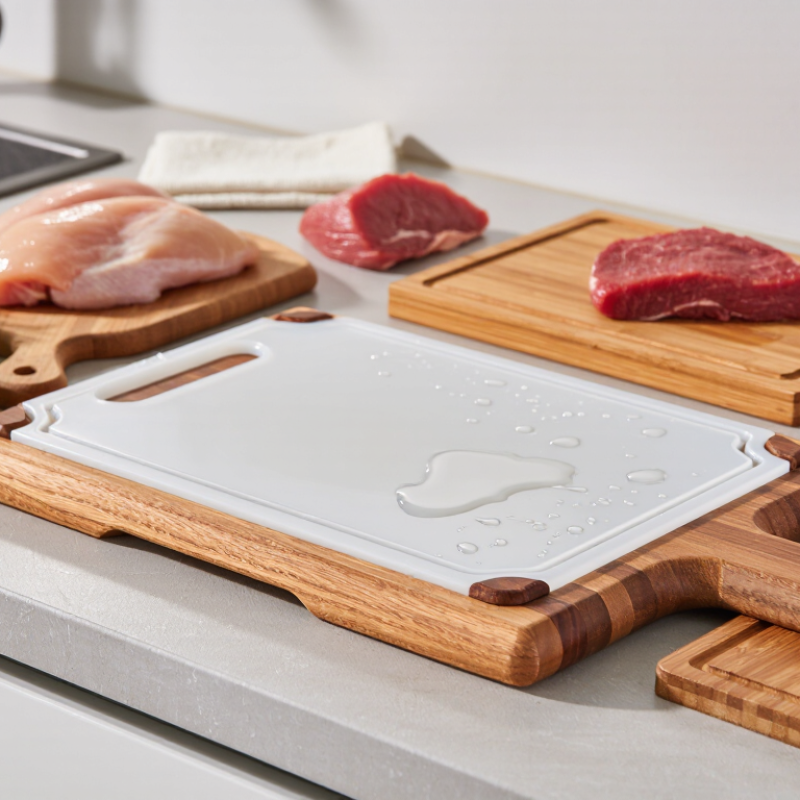
Antibacterial cutting boards rely on surface properties that can slow microbial growth, not make a kitchen sterile. Some boards use copper-containing materials or antimicrobial additives incorporated into the surface. These may interfere with microbes under specific conditions, but performance depends on contact time, moisture, and how much food residue remains. The label alone tells only part of the story.
A clean, smooth surface matters. Deep knife grooves can trap tiny pieces of food and moisture, giving microbes places to linger. After cutting raw chicken, wash the board with hot, soapy water, rinse it well, and let it dry completely. That routine is essential. An antimicrobial surface is not a substitute for cleaning, and it does not make cross-contamination impossible. Use separate boards for raw meat and ready-to-eat foods when practical. I would also treat broad claims cautiously: laboratory tests may use controlled conditions that differ from a busy kitchen. A board’s material, wear, cleaning instructions, and actual test evidence all deserve attention. Even a promising surface can lose usefulness when it is badly scratched or left damp.
What the comparison shows: Intact plastic and stainless-steel surfaces are nonporous; wood is porous. All three can be cleaned, and appropriate food-contact sanitizers can be used when their labels permit. These properties do not establish that a board is antibacterial: antimicrobial performance depends on the material, its condition, and how it is cleaned. Values are categorical indicators, not laboratory measurements.
Under EPA’s Federal Insecticide, Fungicide, and Rodenticide Act (FIFRA), a cutting board treated to control bacteria may be regulated as a pesticide product. If its label or advertising claims that it protects public health by killing germs, EPA registration is generally required. A treated surface is not automatically a safer food-contact surface. EPA registration applies to specific claims and use directions; it does not mean the board replaces washing, sanitizing, or safe food handling. Read the label closely.
The scale of foodborne illness matters. The CDC estimates that 48 million people in the United States get sick from foodborne diseases each year, based on its 2011 estimate. That figure covers many causes, not cutting boards alone. Still, knife grooves can hold moisture and scraps, making everyday cleaning important. “Antibacterial” can sound reassuring. It is not a substitute for evidence. Claims should match the registered product label, and consumers should check whether the treatment is intended for a food-contact surface.
Tips: Wash boards with hot, soapy water after use, and sanitize them when appropriate for the material. Use separate boards for raw meat and ready-to-eat foods. Replace boards with deep, hard-to-clean grooves. One detail is easy to miss: antimicrobial treatment does not make a board self-cleaning. A little skepticism helps.
Wood, plastic, and composite cutting boards are not automatically antibacterial. Their safety depends on surface condition, cleaning, and how quickly they dry. In a 1994 Journal of Food Protection study, food microbiologist Dean Cliver and colleagues found that bacteria behaved differently on wood and plastic: bacteria could remain recoverable from knife-cut plastic, while counts on tested wooden boards declined after contamination. The finding is often oversimplified. It does not prove every wooden board is safer, or that wood disinfects itself.
Plastic boards are nonporous when new and can usually go in a dishwasher, but deep knife grooves trap residue and are hard to clean. Replace boards with persistent cuts. Wood needs prompt washing with hot, soapy water, thorough drying upright, and occasional oiling with food-safe mineral oil. Never leave it soaking beside the sink. Composite boards vary: some tolerate dishwashers, while others may warp or dull knives. Check care instructions.
The USDA Food Safety and Inspection Service recommends separate boards for raw meat and ready-to-eat foods, and replacing worn boards. That advice matters more than claims of antibacterial
performance. A damp board left flat on a counter is a poor choice, whatever its material. There is no perfect board. Research also varies by wood species, plastic type, and test method, so broad material rankings deserve caution.
USDA guidance recommends using separate cutting boards for raw meat, poultry, and seafood, and for ready-to-eat foods such as vegetables and bread. The reason is simple: juices from raw foods can carry harmful bacteria onto foods that may not be cooked again. A clean-looking surface is not proof that it is safe. Keep one board for raw ingredients and another for produce or cooked food. Color labels can help, but clear placement works too. Put the raw-food board near the sink, and keep the clean board away from it.
After preparing raw food, wash the board with hot, soapy water and rinse it well. Clean the knife and counter, too. Small details matter. If a board has deep grooves, food residue can linger in its cuts, making thorough cleaning harder. Replace a board when cracks or worn areas cannot be cleaned properly. I have sometimes treated a quick rinse as enough; it is easy to do when dinner is rushed, but it is not a reliable cleaning step. Separate boards reduce the chance of cross-contamination, while careful washing remains essential. No board can replace safe handling.
| Food or use | Board guidance | Cleaning and sanitation | Food-safety reason |
|---|---|---|---|
| Raw meat, poultry, or seafood | Use a dedicated board, kept separate from boards used for ready-to-eat foods. | After use, wash with hot, soapy water. Rinse and air-dry or dry with a clean towel. Sanitize when appropriate. | Raw animal foods can transfer harmful bacteria to foods that will not be cooked. |
| Produce and ready-to-eat foods | Use a separate, clean board; do not place these foods on a board that has held raw meat, poultry, or seafood unless it has been washed and sanitized first. | Wash the board after use. Clean it before switching from raw animal foods to produce or cooked foods. | Separating tasks helps prevent cross-contamination. |
| Nonporous plastic board | A practical option for a dedicated raw-food board. Check the manufacturer's care instructions. | Many plastic boards are dishwasher-safe; confirm this on the product label. Otherwise, wash thoroughly with hot, soapy water. | A dishwasher-safe board can be cleaned using a dishwasher cycle, but board separation and proper cleaning still matter. |
| Wood board | Use and maintain according to the board's care instructions; avoid assuming that wood is self-sanitizing. | Wash by hand with hot, soapy water and dry promptly. Do not put it in a dishwasher unless the manufacturer specifically says it is dishwasher-safe. | Care depends on the board's construction; routine cleaning remains essential. |
| Sanitizing a washed board | Sanitize after washing when needed, especially after contact with raw animal foods. Follow product-label directions. | USDA guidance describes a solution of 1 tablespoon of unscented liquid chlorine bleach per gallon of water. Apply to the surface, let stand for several minutes, rinse with clean water, and air-dry. Never mix bleach with other cleaners. | Sanitizing is an additional step after cleaning; it does not replace washing away food residue. |
| Deeply grooved or cracked board | Replace a board when wear makes it difficult to clean effectively. | Inspect the surface regularly and clean promptly after each use. | Deep cuts and cracks can make thorough cleaning more difficult. |
| What “antibacterial” means: A material or surface claim does not replace USDA-recommended food-handling practices. Use separate boards for raw animal foods and ready-to-eat foods, and wash boards after each use. Follow current USDA guidance and the board's care instructions. | |||
FDA Food Code §4-501.11 focuses on keeping food-contact equipment cleanable and in good repair. A cutting board should have a smooth, intact surface, without deep grooves that trap food or resist cleaning. The FDA Food Code also calls for food-contact materials to be durable, nonabsorbent, and smooth. “Antibacterial” labeling does not replace these basics.
After cutting raw poultry, wash the board with hot, soapy water and sanitize it using an appropriate food-contact method. Let it dry fully. A board can look clean and still hold residue in worn cuts. I used to judge by appearance; that was not enough.
Tips
No. Some surfaces may slow microbial growth under specific conditions, but they cannot make a kitchen sterile or replace cleaning.
Contact time, moisture, food residue, and surface wear all matter. A label alone does not show how well a board works in everyday use.
Wash it with hot, soapy water, rinse it well, and let it dry completely. Clean the knife and counter, too.
Yes. Keep one board for raw meat, poultry, or seafood, and another for ready-to-eat foods such as bread or vegetables.
Grooves can hold food and moisture, making the board harder to clean thoroughly. Check the surface under bright light.
Replace it when deep grooves, cracks, or worn areas cannot be cleaned properly. A board may look clean and still hold residue.
A smooth, intact, durable, and nonabsorbent surface is easier to maintain. “Antibacterial” does not excuse a damaged surface.
No. A quick rinse is easy when dinner is rushed, but it is not reliable cleaning. Wash the board with hot, soapy water.
What makes a cutting board antibacterial is not simply its appearance or material, but how its surface interacts with microbes and whether any antimicrobial claim has been properly evaluated. Some materials may limit microbial survival under particular conditions, yet no board should be treated as a substitute for washing, sanitizing, and careful food handling. In the United States, products making certain public-health antimicrobial claims may be subject to EPA registration requirements under FIFRA, so “antibacterial” should be understood as a specific claim rather than a guarantee that a board prevents illness.
Wood, plastic, and composite boards differ in durability, cleaning needs, and the evidence available about their surfaces. Regardless of material, keep boards in good condition and replace or retire them when deep grooves make them difficult to clean. Use separate boards for raw foods and ready-to-eat foods to reduce cross-contamination, and clean and sanitize them between tasks. Safe board care also means maintaining surfaces that are smooth, durable, and readily cleanable, consistent with the principles described in FDA Food Code §4-501.11.

Chef Base Kitchen