A warped plastic cutting board is more than an annoying kitchen problem. It can rock on the counter, collect food debris, and make slicing unsafe. Learning How to fix a warped plastic cutting board begins with understanding why it changed shape. Heat, uneven cooling, moisture, and pressure often bend plastic over time.
Dr. Benjamin Chapman, a food-safety researcher, has expressed a practical principle: “Food safety is about managing risk, not eliminating every risk.” That idea matters here. A repair should restore stability without creating deep cracks, rough edges, or hidden spaces for bacteria. The China Top 10 Ways to Fix a Warped Plastic Cutting Board guide explores controlled heating, flat-surface pressing, careful cooling, and replacement decisions. Each method requires patience. Do not rush it.
A warm board may soften slightly under even pressure. A severely curled board may never return perfectly flat. That is the uncomfortable part. I have seen people use excessive heat, only to leave melted edges and permanent marks. Some methods sound simple but fail when the plastic is thin, old, or badly damaged. The safest approach is to inspect the board first, then choose the least aggressive method. A level countertop, clean towel, heavy flat pan, and gentle heat can provide useful control. However, these tools cannot repair every board. If cracks remain, discard it. A stable cutting surface is worth more than saving a cheap kitchen item.
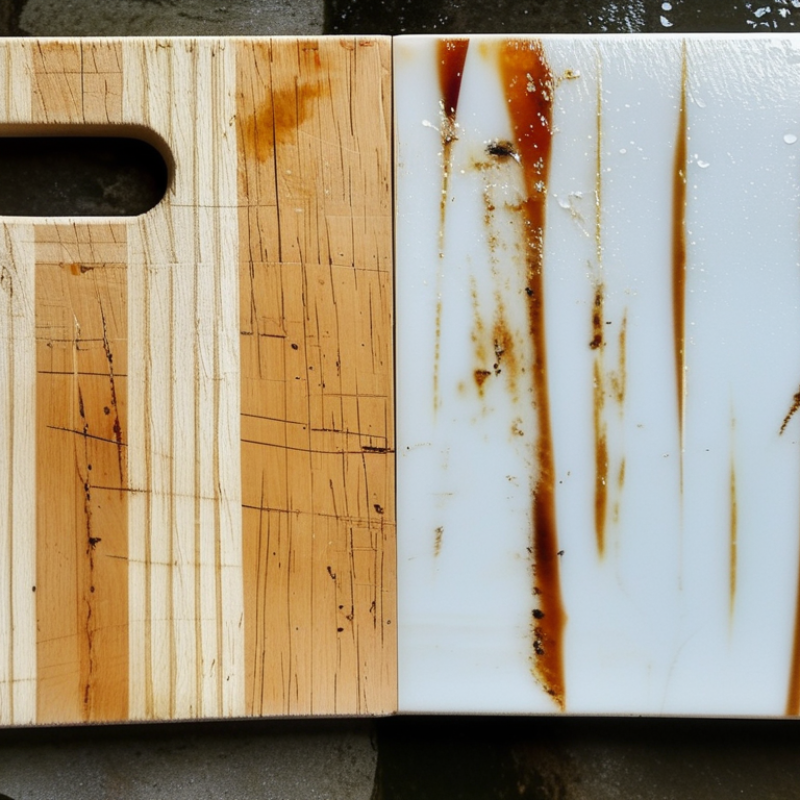
A warped plastic cutting board can often be corrected, but material identification matters. Many boards use high-density polyethylene, or HDPE. It is durable, food-contact friendly, and slightly flexible. HDPE melts at approximately 130–137°C, so excessive heat can permanently damage its surface. Check the underside for an HDPE marking or product documentation. Appearance alone is not reliable.
For a mild bend, wash the board and dry it completely. Place it between two clean, flat surfaces, then add even weight. Leave it for 24 to 48 hours. If pressure alone fails, warm the board gently with hot tap water. Keep the temperature well below its melting range. A thick towel can spread heat more evenly. Rotate the board and repeat short warming cycles. Do not use a direct flame. Avoid placing it in a very hot oven. A heat gun is also difficult to control.
I once heated a board too quickly, and one corner softened before the center moved. That mistake left a shallow glossy mark. It also showed how uneven heat creates new distortion. Inspect the board after each cycle. Stop if it smells unusual, feels sticky, or develops deep cuts. Severe warping may resist every repair method. In that case, replacing the board is safer than forcing it flat, especially when liquid collects beneath food.
HDPE typically melts at approximately 130–137°C. The chart compares the approximate temperature exposure associated with common flattening approaches. Use gentle, even heat, then press the board flat while it cools. Avoid direct high heat because HDPE can deform well below its melting range.
Safety note: Temperature ranges are approximate household values. Test a small area first, keep heat moving, and use protective gloves when handling hot water or heated plastic.
A warped plastic cutting board needs measurement before repair. Clean and dry it first. Temperature can change plastic dimensions, so condition it at 23 ± 2°C and 50 ± 10% relative humidity when possible, following ISO 291:2018. Place the board on a stable, flat table. Do not press the board down.
Lay a rigid 2 mm straightedge across the board’s length, width, and both diagonals. Shine a narrow light underneath. Insert a calibrated feeler gauge at the largest visible gap. Record each reading in millimetres. A gauge entering beyond 2 mm indicates noticeable distortion, but this is only a practical screening limit. It is not a universal replacement specification.
A thin straightedge may also flex, which can create false results. I have found this easy to overlook.
Mark the highest gap with a washable pencil. Repeat the test after turning the board over. If both sides show similar readings, the board may have permanent deformation. If only one side lifts, uneven drying or heat exposure may be involved.
Avoid boiling water, ovens, and aggressive clamping. These methods can damage the plastic surface or create internal stress.
The FDA Food Code 2022, Sections 4-101.11 and 4-602.11, emphasizes smooth, durable, and cleanable food-contact surfaces. Deep grooves or unstable contact therefore matter, even when the measured warp appears modest.
Keep the original readings and test conditions in a simple inspection record.
A warped plastic cutting board can often be reshaped with controlled heat, not brute force. The heat-and-press method works best when the board is clean, dry, and moderately flexible. Set a thermometer near a water bath or heating surface, and aim for 60–80°C. Do not use an open flame or a very hot oven. Many boards soften unevenly, which can create new waves.
Place the board between two smooth, heat-resistant flat surfaces. Warm it gradually until the plastic feels pliable, never sticky. Keep both faces supported. Apply even pressure with clamps, books, or a flat weighted panel. Protect the surfaces with clean towels to prevent scratches and pressure marks.
Check the center and corners every few minutes. If one corner rises, adjust the pressure instead of forcing it down. I would rather repeat a gentle cycle than overheat the board once.
Leave it pressed until completely cool, often for 30–60 minutes. Then inspect it on a level countertop. A slight curve may remain, especially in thin or heavily stressed plastic. That result is a useful warning. The material may be too damaged for reliable repair.
Stop if it cracks, smells strongly, or becomes sticky. Wash it thoroughly before food preparation, and confirm its care instructions before heating.
A warped plastic cutting board can often be corrected with controlled mechanical pressure.
Place it on a flat, heat-resistant surface, with the raised center facing upward. Cover both sides with clean towels to prevent scratches. Position two broad wooden blocks across the board, then add evenly distributed weights.
Clamps can work, but narrow jaws may create new pressure marks. Tighten them gradually, not aggressively. Hold the board for 24 hours, then rotate it 180 degrees and repeat if the curve remains.
This is not magic. Plastic needs time to relax.
Engineering references commonly report HDPE’s linear thermal expansion near 100–200 micrometers per meter per degree Celsius.
That movement is small, but repeated dishwasher heat can amplify distortion. The USDA Food Safety and Inspection Service recommends washing cutting surfaces with hot, soapy water and replacing surfaces that develop deep grooves.
After correction, inspect the board for cracks, sharp edges, or unstable contact. I have found that a slightly flexible board may improve, while a brittle one usually does not.
The result can be imperfect. Avoid excessive force, uneven weights, and sudden temperature changes. A flat ruler or countertop can reveal remaining gaps. Clean it again before food preparation.
A slightly warped plastic cutting board may sometimes be corrected with gentle heat. Place it between two flat surfaces while it cools. Never use extreme heat. It can soften the plastic unevenly or create hidden damage. I have seen boards look flat after heating, then bend again during washing. That is a warning sign. A board that rocks on the counter can slip while you chop. Stability matters more than appearance.
Cracks change the safety decision completely. Even a narrow crack can trap meat juices, vegetable fibers, and moisture. A home brush may clean the surface but cannot reliably reach the entire split. Do not keep cutting across it. Permanent grooves also deserve caution. If a knife leaves deep channels that remain dark after washing, replacement is safer. Clean surfaces are not always safe surfaces.
Discard the board when it stays curved after cooling, rocks repeatedly, or shows cracks through the cutting area. Do not sand a cracked board and call it repaired. That approach may remove a rough edge, but it does not restore the material’s strength. Use separate boards for raw foods and ready-to-eat foods when possible. Replace damaged boards promptly, even if the damage seems minor. I once kept an old board too long because it still looked usable. That judgment was poor. A flat, intact board gives better control, easier cleaning, and fewer doubts during food preparation.
: Sometimes. Gentle heat and even pressure may correct moderate warping. Severely damaged boards may not recover.
Aim for 60–80°C. Warm the board gradually. Do not use an open flame or very hot oven.
Place it between two smooth, heat-resistant flat surfaces. Use clean towels, broad weights, or gradual clamps. Keep pressure even.
Keep it pressed until completely cool, often for 30–60 minutes. Check the center and corners periodically.
Yes. Place the raised center upward and add evenly distributed weights. Hold the board for 24 hours, then rotate it 180 degrees if needed.
Stop if the board cracks, smells strongly, or becomes sticky. A repeated curve is also a warning.
Replace it when it rocks, stays permanently curved, or has cracks through the cutting area. Deep, dark grooves also deserve caution.
Place it on a level countertop and slide a flat ruler underneath. Any large gap or rocking suggests poor contact.
No. Inspect for cracks, sharp edges, deep grooves, and trapped residue. Wash it with hot, soapy water before use.
Plastic may bend again during washing. I once trusted an old board too long. That judgment was poor.
How to fix a warped plastic cutting board begins with identifying its material and condition. Most household boards are made from HDPE, which can soften or melt at approximately 130–137°C, so excessive heat should be avoided. First, check the board’s flatness with a 2 mm straightedge and feeler gauge. If the warp is minor and there are no cracks, gently warm the board to about 60–80°C, then place it between clean, flat surfaces and apply even pressure. Keep the pressure distributed to prevent creating new bends.
For additional correction, secure the board with clamps, weights, or a similar stable setup, and rotate its position during a 24-hour period to encourage uniform flattening. Inspect the result carefully before use, washing and drying the board afterward. A board with deep cracks, severe damage, or permanent warping that affects stability should be discarded rather than repaired, since it may be difficult to clean safely or use securely.

Chef Base Kitchen