How to Prevent Plastic Cutting Boards from Staining in 2026?

Time:2026-10-04 Author:Ethan
0%

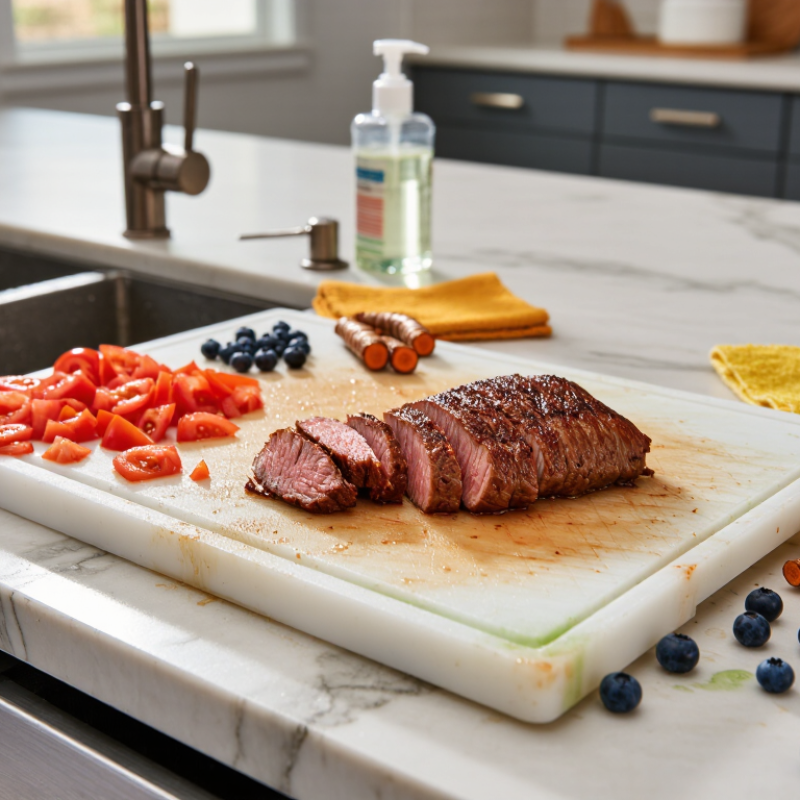
Plastic cutting boards remain popular in 2026 because they are lightweight, affordable, and easy to sanitize. Yet many develop orange, green, or dark marks after repeated use. Why do plastic cutting boards get stained easily? Food pigments enter knife grooves, while tomato sauce, turmeric, berries, and oily meats leave stubborn residues. Heat can make the problem worse. A hot dishwasher cycle may spread pigments across the surface instead of removing them.

This issue is not only cosmetic. The USDA Food Safety and Inspection Service advises consumers to wash cutting boards with hot, soapy water after each use and replace heavily worn boards. The FDA Food Code 2022 also emphasizes smooth, durable, and easily cleanable food-contact surfaces. NSF/ANSI 2 provides related sanitation requirements for commercial food equipment. These standards do not promise stain-free plastic. They highlight a more practical goal: keeping surfaces clean, intact, and easy to inspect.

In kitchen testing, the most visible stains often appear around deep knife lines and board edges. A quick rinse rarely reaches those areas. Separating raw meat, produce, and strongly colored ingredients can reduce buildup. Drying the board fully also matters. Small habits help.

Still, no plastic board stays perfect forever. Some cleaning advice online sounds convincing but lacks controlled evidence. Bleach, abrasive powders, and aggressive scrubbing may lighten stains, but they can also damage the surface or create misleading cleanliness. This guide examines proven prevention methods, material limits, cleaning routines, and replacement signs. The recommendations focus on evidence, practical kitchen experience, and safer food-contact practices.
How to Prevent Plastic Cutting Boards from Staining in 2026?

Identify Why Plastic Cutting Boards Develop Stains

How to Prevent Plastic Cutting Boards from Staining in 2026?

Plastic cutting boards develop stains because food pigments settle into tiny knife grooves. Tomato carotenoids, beet betalains, turmeric curcumin, and paprika oils are common causes. Fat carries these pigments deeper into scratched surfaces. Warm food can also soften residues and spread them across the board.

The material matters. Plastic is generally nonabsorbent, but repeated cutting creates microscopic channels. Those channels trap moisture, color, and food particles. The FDA Food Code 2022 recommends food-contact surfaces that are smooth, durable, and easily cleanable. USDA FSIS also advises replacing boards with excessive wear or hard-to-clean grooves. A stain is not automatically dangerous. However, deep discoloration may reveal poor cleanability. I have noticed that boards often look clean after washing, then darken when fully dry. That detail is easy to miss.

Tips:

Rinse stains quickly. Use warm water, dish detergent, and a soft scrubber. Dry the board upright. Keep one board for produce and another for raw meat. Avoid harsh scraping, which creates more grooves. The CDC estimates 48 million foodborne illnesses occur annually in the United States, so cleanability deserves attention beyond appearance. Still, visual judgment is imperfect. Replace a board when cracks, deep cuts, odors, or persistent residue remain.

Choose Materials and Tools That Reduce Staining

How to Prevent Plastic Cutting Boards from Staining in 2026?

Choose Materials and Tools That Reduce Staining

A pale plastic board shows every tomato mark. I learned this after one rushed dinner. For lower staining, choose dense, nonporous materials such as polypropylene or high-density polyethylene. Their smooth surfaces absorb less pigment than softer, heavily textured plastics. Darker colors also hide stains, but they do not remove food residue. That distinction matters.

Use separate boards for colorful produce, raw proteins, and strong spices. A dedicated vegetable board can prevent beet juice from spreading across everything. Choose a board with a stable, slightly textured underside, so it does not slide during cutting. Excessive texture may trap pigment, though. I once preferred a deeply grooved surface, then noticed it held curry and pepper stains.

Tool choice affects the surface too. Use a sharp knife and moderate pressure. Dull blades can scrape plastic and create tiny grooves where pigments collect. A silicone scraper removes wet residue before it dries. A nylon dish brush works better than a rough metal scrubber, which may leave scratches. Rinse the board immediately with warm water and dish soap, especially after cutting berries, turmeric, or beets. For stubborn color, use a paste of baking soda and water, then rinse thoroughly. Avoid assuming every board is dishwasher-safe; check its care instructions. Some boards warp, and a warped board becomes harder to clean safely.

Clean Plastic Cutting Boards Immediately After Use

Plastic cutting boards stain most easily when beet juice, tomato sauce, or curry oil dries on the surface. Clean the board immediately after use, while the residue is still wet. Scrape away food particles, then rinse both sides under warm running water. Apply dish soap and scrub with a stiff brush, paying attention to knife grooves and the edges.

The USDA Food Safety and Inspection Service recommends washing cutting boards with hot, soapy water after each use. The FDA Food Code 2022 also advises cleaning food-contact surfaces often enough to prevent residue buildup. I usually clean the board within two minutes. That small habit prevents pigments from settling deeply into tiny scratches. It also reduces the chance of transferring raw-food residue to ready-to-eat ingredients.

For stubborn stains, spread a paste of baking soda and water over the mark. Leave it for five minutes, scrub gently, and rinse thoroughly. Avoid abrasive powders that create more scratches. They may remove one stain while making future staining easier. The World Health Organization estimates that contaminated food causes about 600 million illnesses worldwide each year, so surface hygiene deserves more attention than appearance alone. I sometimes used bleach for dark marks, but that was excessive and unnecessary. Never mix cleaning chemicals. Let the board air-dry completely, standing upright so water does not collect underneath.

How to Prevent Plastic Cutting Boards from Staining in 2026? — Clean Plastic Cutting Boards Immediately After Use

Food or Situation Staining Risk Immediate Cleaning Action Recommended Water and Cleaner Drying Method Prevention Tip
Tomatoes, tomato sauce, and red peppers High Scrape off food residue, then rinse and wash as soon as preparation is finished. Warm water and liquid dish detergent; scrub with a clean nylon brush or sponge. Rinse thoroughly and dry upright or with a clean towel. Use a separate board for strongly colored produce when possible, and avoid leaving acidic food on the surface.
Turmeric, curry paste, and other yellow spices Very high Remove loose powder or paste before adding water, then wash immediately to limit pigment absorption. Dish detergent and warm water; repeat washing rather than using abrasive scouring powders. Air-dry completely in a well-ventilated position. Reserve one board for heavily pigmented ingredients because turmeric can leave persistent discoloration.
Beets, berries, and purple cabbage High Rinse away juice promptly and wash both the cutting surface and edges. Warm water with dish detergent; a soft brush helps clean grooves and corners. Dry vertically so moisture does not remain beneath the board. Use a smooth, non-porous board with minimal knife scoring.
Raw poultry, meat, or seafood Medium Wash immediately after transferring the food; never leave raw juices to dry on the board. Hot, soapy water. After washing, apply a food-contact-safe sanitizer according to its label directions when appropriate. Allow the board to dry fully before storing. Keep a dedicated board for raw animal foods and use another board for ready-to-eat foods.
Garlic, onions, and strongly scented foods Low for color; high for odor Wash promptly, paying attention to knife marks where food particles may collect. Warm water and dish detergent; rinse thoroughly to remove cleaner residue. Air-dry completely before stacking or storing. Do not use the board as a storage surface for cut ingredients.
Greasy foods, cheese, and cooked meats Medium Wipe away excess fat with a paper towel, then wash without delay. Warm water and grease-cutting dish detergent; avoid very hot water if it could soften or warp the board. Dry both sides and the edges. Clean residue before it cools and hardens on the plastic.
General daily preparation Low when cleaned promptly Remove scraps, rinse, wash, rinse again, and inspect the surface for remaining residue. Dish detergent and warm running water are suitable for routine handwashing. Store upright with airflow around the board. Cleaning immediately after every use is the most effective way to prevent residues from setting into knife marks.
Dishwasher cleaning Depends on board condition Remove large food particles before loading and follow the board manufacturer's care instructions. Use a dishwasher only if the board is labeled dishwasher-safe. Remove promptly after the cycle and let it dry completely. Replace boards that warp, crack, melt, or develop deep grooves that are difficult to clean.
Visible stain after normal washing Already present Wash first; then use a mild paste of baking soda and water only if the surface remains smooth and intact. Use gentle, non-toxic cleaning methods and rinse thoroughly; do not mix cleaning chemicals. Dry completely before reuse. Staining is mainly cosmetic, but deep cuts and cracks are sanitation concerns and may require replacement.
Long-term storage Low if fully dry Confirm that no food, detergent, or moisture remains before putting the board away. No additional cleaner is needed after proper washing and rinsing. Store vertically or with spacers to allow air circulation. Keep plastic boards away from direct heat and do not place heavy objects on them while damp.

Key rule: Clean plastic cutting boards immediately after use. Use separate boards for raw animal foods and ready-to-eat foods, follow the care instructions for dishwasher use, and replace any board with deep grooves, cracks, warping, or damage that prevents thorough cleaning.

Remove Existing Stains with Safe Cleaning Methods

Stains on plastic cutting boards often come from beet juice, tomato skins, turmeric, or raw meat juices. Start by scraping away food residue with a dull edge. Wash the board with hot water and unscented dish soap. Use a clean brush, not steel wool, which can create deeper scratches. Rinse thoroughly and dry it upright.

For stubborn marks, make a paste with baking soda and a small amount of water. Spread it over the stain, wait 10 minutes, then scrub gently. A 3% hydrogen peroxide solution may help with darker discoloration, but test a hidden area first. Never mix cleaning chemicals. Rinse the board several times after treatment. Public-health guidance also recommends sanitizing boards after raw meat contact, using only a properly diluted solution and following its label directions.

I once scrubbed a stained board far too aggressively. It looked cleaner, but the new grooves trapped food more easily. That was a poor trade-off. Replace a board when deep cuts remain after cleaning, or when odors persist. A dishwasher can help only if the board’s care instructions allow it. Keep separate boards for raw proteins and ready-to-eat foods when possible. Stains are mostly cosmetic. Hidden damage matters more.

Prevent Future Stains Through Proper Care and Storage

A plastic cutting board stays cleaner when care begins before the food dries. Rinse it immediately after cutting colorful ingredients, such as turmeric, beetroot, or tomato. Use warm water, mild dish soap, and a soft brush. Scrub along the cutting marks, where food pigments often collect. Avoid harsh scouring pads, which can deepen scratches and create more places for stains.

I wash the board after every use, then dry both sides with a clean towel. Leaving it wet beside the sink has caused faint orange patches in my own kitchen. It looked harmless, but the damp surface also developed an unpleasant smell. A clean board needs airflow. Store it upright in a rack or place it on its edge against a dry wall. Do not stack it while moisture remains underneath.

Use separate boards for raw meat, vegetables, and ready-to-eat foods when possible. This habit reduces cross-contamination and makes cleaning more predictable. Follow the board’s care instructions, especially before using heat or a dishwasher. Excessive heat may warp some plastic boards. I have learned this the inconvenient way.

Inspect the surface every few weeks. Deep grooves, persistent discoloration, or a rough texture may mean replacement is sensible. Staining alone does not always indicate danger, but damaged plastic deserves attention. Keep the board away from direct sunlight and strong cleaning chemicals. Store it clean, dry, and easy to reach, because proper storage encourages consistent care.

FAQS

Which plastic materials resist stains better?

Choose dense, nonporous plastics, such as polypropylene or high-density polyethylene. Smooth surfaces absorb less pigment. Dark colors hide marks, but they do not remove residue.

Which foods stain plastic cutting boards most easily?

Beets, tomatoes, berries, and turmeric leave strong pigments. Curry oil can also cling to knife grooves. Clean these marks while they are still wet.

How soon should I clean a plastic cutting board?

Clean it immediately after use, ideally within two minutes. Scrape off food particles first. Rinse both sides with warm water, then wash with dish soap.

What cleaning method works for stubborn stains?

Mix baking soda with enough water to form a paste. Spread it over the stain for five minutes. Scrub gently, then rinse thoroughly.

Can a rough scrubber remove stains more effectively?

A nylon dish brush is usually safer than a metal scrubber. Rough metal can scratch the surface. Those tiny scratches may collect more pigment later.

How can I prevent food colors from spreading?

Use separate boards for colorful vegetables, raw proteins, and strong spices. A dedicated vegetable board can contain beet juice. It is a simple habit.

Does the board’s texture affect staining?

A slightly textured underside can prevent slipping. Deep grooves may trap curry, pepper, and dried sauce. I once chose a heavily grooved board and regretted it.

Can I put every plastic cutting board in a dishwasher?

No. Check the care instructions first. Heat may warp some boards, making them harder to clean safely. Let the board air-dry upright after washing.

Conclusion

Plastic cutting boards can develop stains when pigments from foods such as tomatoes, berries, spices, and sauces enter tiny scratches or porous areas created by repeated knife use. Why do plastic cutting boards get stained easily? Their light-colored surfaces show food pigments clearly, while delayed cleaning allows oils and colors to set. Choosing a durable, nonporous board and using separate boards for strongly colored foods can reduce discoloration. Washing the board immediately after use with warm water, dish soap, and a suitable scrub brush is also an important first step.

For existing stains, apply a gentle paste made from baking soda and water, let it sit briefly, and rinse thoroughly. A diluted food-safe sanitizing solution may be used when appropriate, following its safety instructions and rinsing afterward. Avoid harsh abrasives that can deepen scratches. To prevent future stains, dry the board completely, store it upright with good airflow, avoid excessive heat, and replace it when deep grooves or cracks make cleaning difficult.

Ethan

Ethan

Ethan is a seasoned marketing professional with a deep expertise in our company's innovative product line. With a passion for sharing knowledge and insights, he takes the lead in regularly updating our corporate blog, where he explores industry trends, product features, and effective marketing......