Is marble look cutting board good for daily use? The answer depends less on the pattern than on the board’s actual material. A marble-style surface may be glass, stone, plastic, or another composite, and each behaves differently under a knife. That distinction matters. A hard glass or stone board can resist stains and odors, but it may dull knife edges faster and feel slippery. A softer plastic board is often gentler on knives, though it can develop grooves that require careful cleaning or eventual replacement.
For everyday cooking, small details count: whether the board stays steady while chopping, fits beside the sink, and can be cleaned according to its maker’s instructions. Imagine slicing a ripe tomato, then chopping herbs; a smooth surface can look elegant, yet stability and knife control matter more than appearance. Check the product specifications, especially the material, care requirements, and whether the board is intended for food preparation. Avoid assuming that a marble pattern means real marble—or that every glossy board is equally hygienic. Not always obvious.
This guide will compare common materials, explain their likely benefits and trade-offs, and identify features worth checking for daily use. It will also consider maintenance, knife wear, and practical safety without treating one board as right for every kitchen. There is no perfect answer; even a convenient board may have a drawback that becomes noticeable after repeated use.
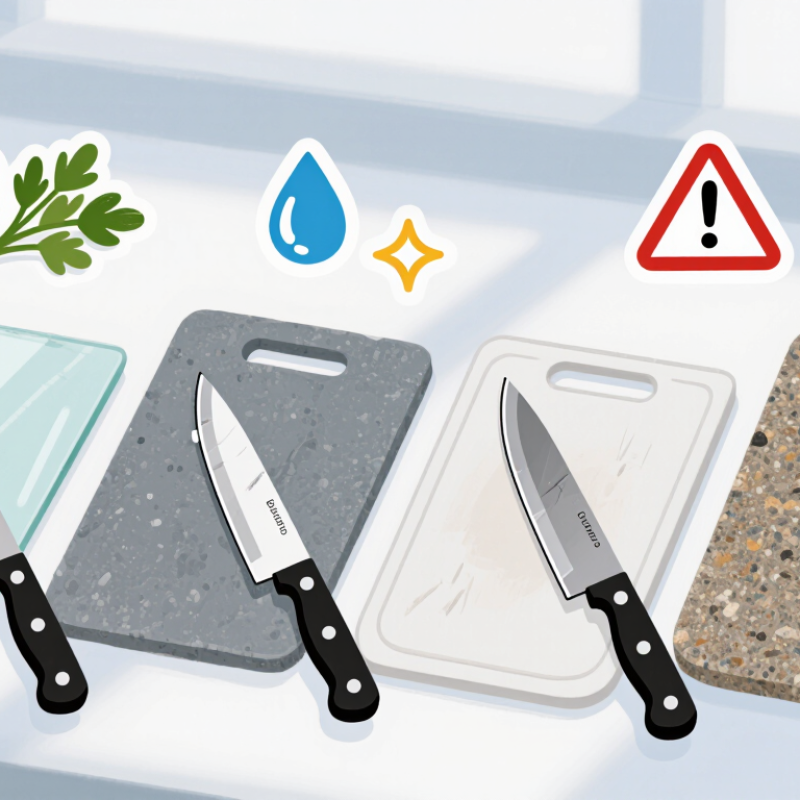
A marble-look cutting board is a board designed to resemble natural marble, usually with pale coloring and gray, charcoal, or gold-like veins. The pattern may be printed, molded, or built into a surface layer. The board itself may be plastic, glass, wood, or a composite material. It is not necessarily made from marble. That distinction is easy to miss.
For daily use, the material matters more than the pattern. A softer plastic surface is generally kinder to knife edges than glass or stone-like surfaces, which can feel slick and wear blades faster. Composite boards vary, so check their care instructions and whether the surface is intended for cutting. Look for a stable base, a useful thickness, and enough room for a chopping task. A tomato should not skate across the board. Neither should the board itself. I would not judge one by its appearance alone; that shortcut is tempting, but unreliable. Some decorative finishes may also show scratches or staining sooner than expected, depending on their construction and care. After washing, dry the board fully, especially around seams or layered edges.
“Marble-look” describes an appearance, not a material. The chart compares approximate Mohs hardness for common surface materials that may be used for cutting boards.
What this means: Harder surfaces can be tougher on knife edges. Mohs hardness measures scratch resistance; it does not determine food safety or overall cutting-board quality. Check the board’s actual material and care instructions before daily use.
Approximate values: marble (calcite-rich) 3–4, glass 5–6, and quartz 7 on the Mohs scale. The chart plots the midpoint of each range.
A marble pattern describes a board’s appearance, not its material. Many marble-look boards use plastic, resin-based composites, glass, or ceramic, with printed or molded veining. Their cores and surface coatings can differ, even when two boards look nearly identical. Check the product specifications and food-contact information before buying. The edges matter, too: a poorly finished rim may chip or trap food residue.
For daily prep, the material determines how the board feels and wears. Plastic and some composites are generally gentler on knife edges than glass or ceramic, while glass and ceramic can be easy to wipe clean but hard on blades. A glossy finish may show fine scratches or knife marks over time. That does not always mean the board has failed, but it can make its condition harder to judge. Marble appearance alone tells you little about durability.
Tips: Check care instructions, look for a stable, nonslip base, and wash the board after contact with raw ingredients. Avoid assuming every surface is dishwasher-safe. If the maker’s cleaning guidance is unclear, that is worth weighing before daily use.
A marble-look cutting board can make a kitchen feel tidier, and its smooth surface is easy to wipe after slicing fruit or preparing sandwiches. The pattern also hides small stains better than a plain white board. But “marble look” describes the appearance, not the material. These boards may be plastic, glass, ceramic, or composite, and each behaves differently. Check the product details before buying.
For daily chopping, a plastic or composite surface is usually kinder to knife edges than glass or ceramic. Hard boards can dull blades faster, especially with repeated chopping. A smooth board may also slide on a damp counter, so place a dry towel underneath.
Small detail. After handling raw meat, wash the board promptly with hot, soapy water and follow its care instructions. Some boards can go in a dishwasher; others may warp or crack.
I would not choose by appearance alone, even though that is tempting. A marble pattern can look clean while scratches and knife marks still collect over time. The right choice depends on the actual material, stability, and how much care you are willing to give it.
A marble-look cutting board can suit daily prep, but its appearance does not reveal its material. It may be stone, glass, ceramic, or plastic, and each surface needs different care. That matters. Check the food-contact label and cleaning instructions before using it. Very hard surfaces, including stone and glass, can dull knives faster than wood or plastic. The CDC’s 2011 foodborne illness estimates report about 48 million illnesses in the United States each year. That figure is not specific to cutting boards, but it shows why careful food handling matters. Keep a separate board for raw meat and ready-to-eat foods.
After each use, wash the board with hot, soapy water, following USDA Food Safety and Inspection Service guidance. Rinse away soap and dry it fully, including around any textured edges. Use a dishwasher only if the maker says the board is dishwasher-safe; heat can damage some materials. If raw meat juices touch the surface, clean and sanitize it using guidance suited to that material. Deep knife grooves can be hard to clean. Replace a board that is cracked, chipped, or persistently stained. The awkward part is that “marble look” describes a finish, not a care standard, so the label deserves a closer look.
A “marble look” describes the finish, not the board’s material. Check whether the core is glass, stone, plastic, or composite, then follow its care instructions. For daily chopping, a stable, food-contact-safe surface matters more than a polished pattern. Press one corner on the counter; if it rocks, it may slide when you slice a tomato. Look for nonslip feet and enough room for a chef’s knife and chopped vegetables.
Hard glass or stone can be tough to cut on and may dull knives faster than wood or plastic. A lighter plastic or composite board is often easier to lift and wash, though deep knife grooves can be harder to clean. USDA Food Safety and Inspection Service guidance recommends separate boards for raw meat and ready-to-eat foods, and washing boards with hot, soapy water after use. That matters: CDC estimates that foodborne illnesses affect about 48 million people in the United States each year.
Check whether the board can go in the dishwasher; don’t assume that a glossy surface is dishwasher-safe. For a typical weekday meal, a broad, grippy board that rinses clean may beat a heavy decorative slab. A small compromise: it may stain or show scratches. Inspect it regularly, and replace it if cracks or grooves remain difficult to clean.
| Board Type | Knife Friendliness | Stability and Weight | Cleaning and Care | Best Daily Tasks | What to Check Before Buying |
|---|---|---|---|---|---|
| Natural marble | Hard, cold stone can dull knife edges faster than wood or plastic. Not ideal for frequent chopping. | Usually heavy and stable on a dry, level counter, but difficult to move and store. | Wipe promptly after use. Avoid acidic foods such as lemon or vinegar sitting on the surface, as they can etch marble. Follow the maker’s sealing and care instructions. | Serving cheese, pastry work, or occasional light slicing. | Choose it mainly for serving or presentation, not as the only everyday chopping board. |
| Tempered glass with a marble-look print | Very hard and likely to dull knives quickly; the surface can also be slippery during cutting. | Typically rigid, with stability depending on the feet or mat underneath. | Often easy to wipe clean, but check whether the printed finish and any non-slip parts have specific care instructions. | Serving, setting down hot cookware only when the manufacturer allows it, or occasional light preparation. | For regular chopping, prioritize a more knife-friendly surface. Do not assume every glass board is heat-safe. |
| Marble-patterned plastic or polypropylene | Generally more forgiving on knife edges than stone or glass. Cutting can leave grooves over time. | Usually lighter and easier to handle; non-slip features vary by design. | Many models are dishwasher-safe, but check the product instructions. Replace the board if deep grooves become difficult to clean. | Everyday chopping of vegetables, fruit, bread, and other routine ingredients. | Look for a stable base, a useful juice groove if needed, and clear dishwasher-care guidance. |
| Marble-look composite or resin | Performance varies by composition. Some surfaces are relatively gentle on knives; harder composites may be less forgiving. | Can feel substantial, though weight and grip differ between products. | Care requirements vary. Check whether the board is nonporous, dishwasher-safe, and suitable for the cleaning products you use. | General prep when the maker confirms the surface is intended for chopping. | Check the exact material and care label rather than relying on the marble-look appearance. |
| Wood with a marble-look finish or inlay | The exposed wood area is generally more knife-friendly than stone or glass; a hard inlay should not be used as a chopping zone. | Often provides a solid work surface, but grip depends on the board’s design and counter contact. | Usually requires hand washing and prompt drying. Avoid soaking; follow any finish-specific care directions. | Chopping on the wood section and serving on the decorative area. | Check that the design leaves enough uninterrupted wood for cutting and that the finish is suitable for food contact. |
Quick guide: A marble look is an appearance, not a material specification. For frequent chopping, a marble-patterned plastic board or a suitable wood cutting surface is generally more practical than natural marble or glass. Always check the product’s material, food-contact information, and care instructions.
Not necessarily. The pattern may be printed or molded onto plastic, glass, wood, or composite.
Check the actual material, food-contact information, care instructions, thickness, and base stability. Appearance alone can mislead.
Plastic and some composite boards are generally gentler than glass or stone. Hard surfaces can dull knives faster.
It can, especially on a damp counter. Place a dry towel underneath, and check that the board stays steady.
Wash it with hot, soapy water, rinse well, and dry it fully. Pay attention to seams and textured edges.
No. Use a dishwasher only when the care instructions allow it. Heat may warp or crack some boards.
Keep separate boards for raw meat and ready-to-eat foods. Clean and sanitize a surface if raw meat juices touch it.
Replace it if it is cracked, chipped, or persistently stained. Deep knife grooves can be difficult to clean.
They may disguise small stains, but scratches and knife marks can still collect. I might be tempted by the neat look, but the material matters more.
Is marble look cutting board good for daily use? The answer depends on its material and how you use it. These boards are designed to resemble marble but are commonly made from materials such as plastic, glass, or composite blends. Their appearance can add a polished touch to a kitchen, while a smooth, nonporous surface may be easy to wipe clean and resist stains. However, some versions can be slippery, heavy, or hard on knife edges, and their durability varies by construction.
For everyday tasks, choose a stable board with a surface suited to your knives and the foods you prepare. Use it on a dry, secure countertop, avoid placing excessive force on brittle materials, and follow the maker’s care instructions. Wash it promptly after use and let it dry thoroughly. Considering comfort, grip, cleaning needs, and knife wear can help you decide whether a marble-look board is a practical choice for your daily kitchen routine.

Chef Base Kitchen