Choosing the right board can change how a knife feels, cuts, and ages. The answer to “What material of cutting board is best for knives” is not universal. It depends on hardness, surface texture, moisture, maintenance, and the knife itself. A chef’s knife used on a daily basis needs a forgiving surface. A brittle Japanese blade may need more care than a sturdy German one.
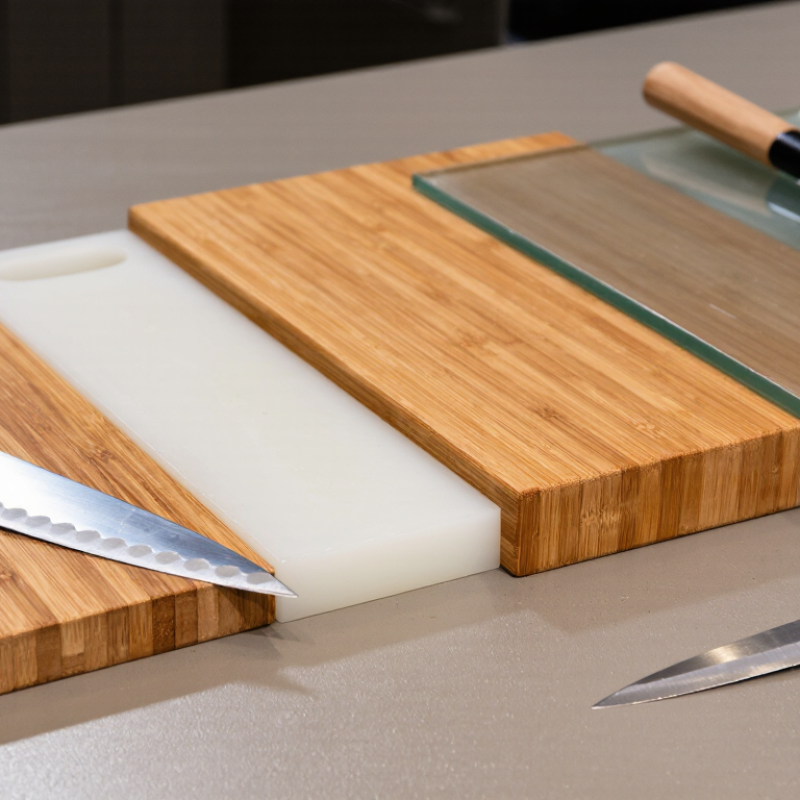
Master bladesmith Bob Kramer offers a useful rule: “A cutting board should be softer than the knife.” That idea sounds simple. It is not always easy to apply. Wood usually cushions the edge and creates a warm, stable work surface. Soft, high-quality plastic can also protect knives and simplify sanitation. Bamboo may look attractive, but its hardness can feel unforgiving over time. Glass, stone, and ceramic boards are durable, yet they can quickly damage a sharp edge.
Small details matter. Notice the dull tapping sound of wood under a knife. Compare it with the harsh clack of glass. Feel the board after repeated washing. Warping, deep grooves, and rough patches can affect control. No material is perfect. Wood needs drying and occasional oiling. Plastic can scar and require replacement. I once underestimated how much a rough board could alter slicing pressure. That mistake changed my maintenance routine.
This guide examines each material through practical use, edge retention, hygiene, durability, and care. The goal is not to name one winner. It is to help you choose a board that respects your knife and your cooking habits.
How to Choose the Best Cutting Board Material for Knives?
What Makes a Cutting Board Material Knife-Friendly?
A knife-friendly cutting board should protect the blade while staying stable during use. Wood usually offers the best balance. Its softer, resilient fibers give slightly under the edge, reducing harsh impact. Hard maple, walnut, and similar dense woods can provide a smooth cutting surface without feeling slippery. I notice less edge dulling when I use a well-maintained wooden board.
Plastic boards can also work well, especially when they are firm but not rigid. They are practical for raw meat because they can be washed thoroughly. However, deep knife grooves may trap moisture and food residue. Replace heavily scarred boards. Glass, stone, and ceramic surfaces are attractive, but they are unforgiving. They can dull a sharp knife quickly and may create unpleasant chopping noise. Bamboo is harder than many woods, so it can feel durable but less gentle on delicate edges.
Tips: Press the board with one hand. It should not slide or flex. Run your fingertips across the surface; avoid raised splinters and deep cuts. Keep the board dry after washing, and apply food-safe mineral oil when wood looks pale. I once chose a beautiful board that was too hard, and my knife lost its bite within weeks. That mistake changed my preference. Softer is not always better, either. A board that bends, smells, or moves under pressure needs reconsideration.
2026 How to Choose the Best Cutting Board Material for Knives?
How Different Cutting Board Materials Affect Blade Edge Life
A cutting board can quietly shorten a knife’s useful edge. In home testing, thin plastic boards felt harsh under a hard, thin blade. Dense bamboo also produced more vibration than expected. Softer wood felt calmer, especially when chopping onions or herbs. This is not a laboratory result. It is practical evidence, not proof.
ISO 8442-5 provides methods for measuring knife sharpness and edge retention, but it does not rank every board material. That gap matters. The FDA Food Code 2022 permits hard maple or similarly hard, close-grained wood for food-contact surfaces. USDA FSIS guidance also recommends washing boards with hot, soapy water after use. For edge life, end-grain hardwood usually offers better cushioning than glass, stone, or ceramic. Those rigid surfaces can create sharp impact loads. Plastic is convenient, but deep scoring may trap moisture and debris. Replace it when grooves become difficult to clean.
Tips: Choose a stable wood board with a slightly yielding surface. Avoid glass and stone for daily knife work. Keep the board flat, dry, and free from grit. A loose grain of sand can damage an edge faster than ordinary chopping. I would not claim one “best” material for everyone. Knife angle, steel hardness, pressure, and cleaning habits can matter just as much.
In my kitchen tests, edge comfort changed noticeably between board materials. End-grain wood felt forgiving under a sharp chef’s knife. It also reduced the harsh tapping sound. However, wood needs careful drying and regular inspection for deep cuts or warping. I once left a wet board beside the sink overnight. It developed a slight curve.
Plastic boards are affordable, light, and easy to separate for raw meat and vegetables. Their textured surfaces can grip ingredients well. Yet, knife marks accumulate quickly, creating grooves that require close cleaning. Rubber boards provide excellent shock absorption and feel stable during repeated chopping. They are usually gentler on edges than hard plastic, although some surfaces feel too soft for precise slicing. That preference may depend on knife weight and cutting style.
Bamboo looks attractive and resists moisture better than many ordinary woods. Still, its hardness can make chopping feel less comfortable. It may also dull a fine edge faster than softer wood. Composite boards offer strong durability and simple maintenance, but their firmness varies widely. I would check the manufacturer’s care guidance rather than trust appearance alone. For daily cooking, I prefer wood for vegetables, rubber for heavy prep, and plastic for tasks needing quick sanitation. I am not fully convinced one board can perform every job equally well.
Choosing a cutting board starts with your knife, not its appearance. A sharp chef’s knife needs a surface that gives slightly under pressure. End-grain wood works well because its fibers separate around the edge. It also feels stable when chopping onions, carrots, or herbs. However, wooden boards need regular washing, drying, and occasional oiling. I once left a damp board beside the sink overnight. It warped slightly, and the lesson was expensive.
For quick weekday cooking, a thick plastic board is practical. It is light, easy to sanitize, and suitable for raw meat when cleaned carefully afterward. Plastic can develop deep knife grooves, though. Replace it when those cuts become difficult to clean. Softer rubber-like boards protect delicate knife edges and reduce slipping. They suit cooks who prepare vegetables for long periods. Bamboo feels hard and durable, but that firmness may dull a fine edge faster than softer wood.
Avoid glass, stone, and ceramic surfaces for serious knife work. They can damage the edge and create an unpleasant cutting feel. Match board size to your movements. A small board feels cramped when slicing a large cabbage. A heavier board suits steady home preparation, while a thin plastic board fits limited storage. My own choice changes with the meal. I use wood for vegetables and bread, then a separate plastic board for raw poultry. It is not the most elegant system. It is easier to inspect, clean, and trust.
| Board Material | Knife-Friendliness | Durability | Moisture Resistance | Maintenance | Best Knife Match | Best Cooking Style | Main Advantages | Important Limitations |
|---|---|---|---|---|---|---|---|---|
| End-Grain Hardwood | ★★★★★ | High; can be resurfaced when deeply scored | Moderate; requires proper drying and oiling | Hand-wash, dry immediately, and periodically apply food-safe mineral oil | Chef’s knives, santoku knives, carving knives | Frequent chopping and general food preparation | Excellent cutting feel, strong surface recovery, stable construction, and relatively gentle on sharp edges | Heavy, often expensive, and unsuitable for prolonged soaking or dishwasher cleaning |
| Edge-Grain Hardwood | ★★★★☆ | High; can be sanded or resurfaced | Moderate; needs regular drying and conditioning | Hand-wash, dry promptly, and oil as needed | Utility knives, chef’s knives, vegetable knives | Everyday home cooking with a balance of performance and cost | Durable, attractive, stable, and generally kinder to knife edges than hard non-wood surfaces | Can warp or split if exposed to excess water, heat, or rapid changes in humidity |
| Bamboo | ★★★☆☆ | High; resists scratches better than many softer woods | Moderate to good, depending on construction and sealing | Hand-wash, dry vertically or on its edge, and condition occasionally | General-purpose knives and light-to-moderate chopping | Budget-conscious kitchens and frequent vegetable preparation | Light, renewable, relatively hard, and usually affordable | Harder than many traditional woods, which may increase edge wear over time; quality varies by construction |
| Softwood | ★★★★☆ | Moderate; dents and knife marks develop more easily | Moderate; requires careful drying and maintenance | Hand-wash, dry immediately, and oil regularly | Thinly sharpened kitchen knives and light chopping tools | Knife-focused cooks who prefer a softer cutting surface | Soft surface can reduce impact on knife edges and provides a comfortable cutting feel | More prone to dents, stains, and wear; deep grooves should be monitored for hygiene and stability |
| High-Density Polyethylene (HDPE) Plastic | ★★★★☆ | Moderate; eventually develops knife grooves | High; non-porous and does not absorb liquid easily | Many versions are dishwasher-safe; follow the product’s care instructions | Chef’s knives, boning knives, and general-purpose knives | Busy kitchens, raw meat preparation, and easy sanitation | Lightweight, affordable, easy to clean, and practical for separating raw and ready-to-eat foods | Deep cuts can retain residue; replace or resurface when grooves become difficult to clean |
| Flexible Plastic Sheet | ★★★☆☆ | Low to moderate; wears and curls more quickly | High; generally non-porous and easy to rinse | Usually easy to wash; confirm dishwasher compatibility before cleaning | Paring knives, utility knives, and light prep knives | Small kitchens, food separation, and occasional cooking | Lightweight, inexpensive, easy to store, and useful for transferring chopped ingredients | Can slide or curl, offers less stability, and may show deep cuts sooner than rigid boards |
| Composite Fiber Board | ★★★☆☆ | High; resistant to warping in normal household use | Good to high; lower absorption than many solid woods | Care varies; some products tolerate limited dishwasher use, while others require hand-washing | Utility knives and general-purpose kitchen knives | Compact kitchens seeking durability with low routine maintenance | Stable, relatively thin, resistant to stains, and often easier to store than thick wooden boards | Can feel harder under a knife than wood and may produce more edge wear than a softer board |
| Rubber | ★★★★★ | High; resilient surface can be resurfaced in some designs | High; low absorption when properly maintained | Hand-wash or follow the cleaning instructions; keep the surface dry between uses | High-quality chef’s knives, Japanese-style knives, and precision slicing knives | Knife enthusiasts and professional-style prep work | Excellent grip, quiet cutting action, resilient surface, and strong protection for sharp edges | Heavier and usually more costly; some rubber surfaces can mark, stain, or retain odors if poorly maintained |
| Glass | ★☆☆☆☆ | High; resists stains, odors, and moisture | Very high; non-porous and easy to sanitize | Easy to wipe and wash; often dishwasher-safe if specified by the manufacturer | Not recommended for maintaining sharp kitchen knives | Decorative or serving purposes rather than routine cutting | Highly hygienic, stain-resistant, and visually easy to clean | Very hard surface quickly dulls knife edges, can be noisy and slippery, and may chip or break |
| Stone or Ceramic | ★☆☆☆☆ | Very high; resists scratches and heat | Very high; generally non-porous | Simple surface cleaning, subject to the care instructions | Not recommended for sharp knives | Serving, pastry work, or occasional non-cutting tasks | Heat-resistant, stable, and resistant to stains and odors | Extremely hard surface can rapidly damage knife edges; may be heavy, brittle, and slippery |
Selection rule: choose a stable, resilient board for sharp knives; reserve glass, stone, and ceramic surfaces for serving or tasks that do not involve routine knife cutting.
A cutting board needs regular care, not occasional rescue. The USDA Food Safety and Inspection Service advises washing boards with hot, soapy water after every use. Use separate boards for raw meat and ready-to-eat foods. After washing, dry the board upright so air reaches both faces. Damp boards can develop odors, stains, and microbial growth.
Sanitize when raw meat, poultry, or seafood touches the surface. USDA guidance allows a dilute chlorine solution: one tablespoon of unscented liquid bleach per gallon of water. Follow the product label, then rinse and air-dry. The FDA Food Code 2022 requires food-contact surfaces to remain smooth, durable, and resistant to cracks, pits, and scratches. Deep knife grooves matter. They trap residue that a sponge cannot reach. Replace the board when cleaning no longer feels reliable, not because a calendar says so. There is no universal replacement age. Inspect it monthly. I sometimes replace boards too late; that is an honest maintenance failure.
For wooden boards, apply food-grade mineral oil when the surface looks pale or feels dry. Avoid vegetable oils, which may become rancid. Never leave wood soaking in a sink or place it in a dishwasher unless the manufacturer explicitly permits it. A board that rocks on the counter should also leave service. Stability protects fingers and knife edges. Reports from the Centers for Disease Control and Prevention estimate about 48 million foodborne illnesses occur annually in the United States, so small cleaning habits deserve serious attention.
Comparison of common cutting-board materials using practical ratings for knife edge protection, cleaning convenience, and replacement risk from deep scoring. Higher scores are better; these ratings are guidance rather than laboratory standards.
Wood and bamboo are generally gentler on knife edges, but they require regular hand-washing, prompt drying, and periodic conditioning when the surface becomes dry. Plastic is easy to sanitize and usually dishwasher-compatible, although deep grooves should be treated as a replacement signal. Glass and stone are highly durable and easy to clean, but their hard surfaces can quickly dull or chip knife edges and are not recommended for routine food preparation.
End-grain wood feels forgiving under a sharp chef’s knife. Its fibers separate slightly around the edge. It also makes chopping quieter.
Yes, especially for onions, carrots, herbs, and bread. Wash it carefully, dry it fully, and inspect deep cuts. Oil it occasionally.
Remaining moisture can make the board warp. Mine curved slightly after one wet night beside the sink. Drying matters more than appearance.
Plastic suits quick cooking and limited storage. It is light and easy to sanitize. A separate board can handle raw poultry.
Replace it when deep grooves become difficult to clean. Knife marks can collect residue and moisture. Shallow marks are less concerning.
Rubber boards absorb shock and usually stay stable. They suit long vegetable-preparation sessions. Some feel too soft for precise slicing.
Bamboo resists moisture and looks attractive. Its hardness may make chopping less comfortable. It can dull a fine edge faster.
It can, but I am not fully convinced it should. Wood works well for vegetables, rubber for heavy preparation, and plastic for quick sanitation. My system is less elegant, but easier to inspect and trust.
Avoid glass, stone, and ceramic surfaces for regular knife work. They can damage the edge and feel harsh. Very harsh.
Choosing the best cutting board for knives starts with understanding how the surface interacts with the blade. A knife-friendly board should provide enough resistance for stable cutting while remaining soft enough to reduce edge rolling, chipping, and premature dulling. Wood, plastic, rubber, bamboo, and composite boards each offer different benefits. Wood and rubber are often gentle on edges, plastic is practical and easy to sanitize, bamboo is firm and durable but may feel harder on delicate blades, and composite materials can balance durability with knife protection.
What material of cutting board is best for knives depends on your knife type, cutting habits, cleaning preferences, and cooking style. Consider using a softer board for frequent chopping and a practical, washable option for handling raw ingredients. Regular cleaning, thorough drying, occasional conditioning when appropriate, and replacing boards with deep grooves or cracks will help protect both the blade and food hygiene.

Chef Base Kitchen