 Chef Base Kitchen
Can Plastic Cutting Boards Go in Dishwasher 5 Tips?
Can you put plastic cutting boards in the dishwasher? Often, yes—but the board’s care label should guide you. Many sturdy plastic boards are dishwasher-safe, yet heat and repeated washing can cause warping or rough surfaces. Small details matter. A board that rocks on the counter may be harder to use safely.
This guide covers five practical tips for checking a board, loading it, and caring for it after a cycle. Look for the manufacturer’s instructions before washing, and place the board where water can reach both sides. Avoid assuming that every plastic board can handle a hot drying cycle. Heat changes things. Thin boards may bend, while deep knife grooves can hold food residue even after washing. A dishwasher can clean a board, but it cannot repair damage or replace sensible food-handling habits. If the surface is badly scored, cracked, or persistently stained, consider replacing it. That judgment is not always obvious; a faint mark may be harmless, while a rough groove deserves closer attention. The tips ahead explain what to check and when handwashing may be the gentler choice. One quick inspection can save a warped board—and a frustrating cleanup.
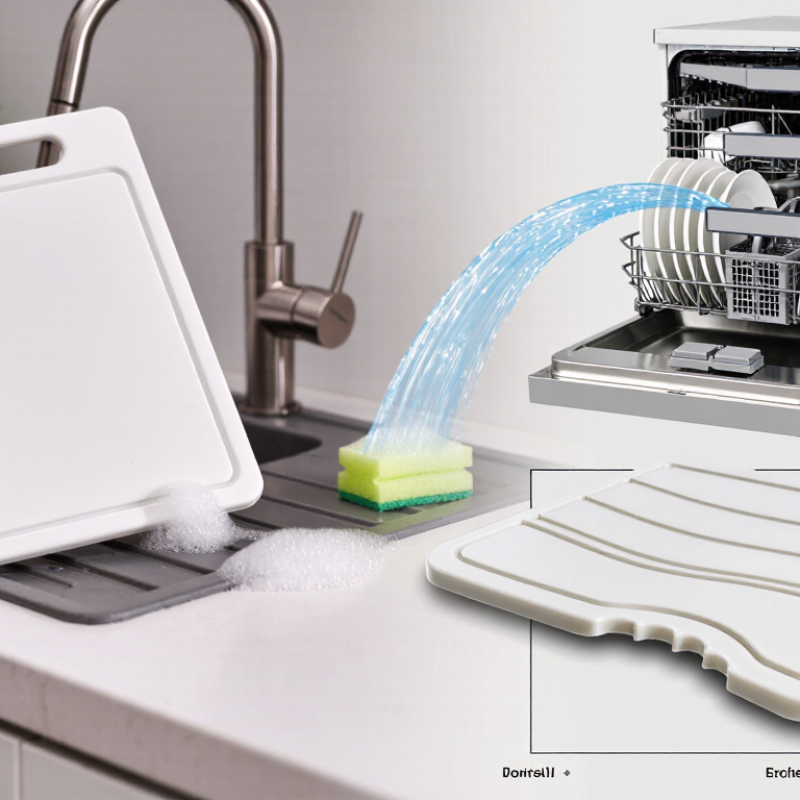
Check the Manufacturer’s Label for Dishwasher-Safe Temperature Limits
Before putting a plastic cutting board in the dishwasher, find its care label or product manual. Look for “dishwasher-safe,” a maximum temperature, and any top-rack instruction. These details matter because a board may tolerate warm washing but deform during a hotter sanitizing or drying cycle. Check the cycle settings too. The dishwasher’s actual temperature can vary by model and program, so “dishwasher-safe” is not a promise that every cycle is suitable. If the label gives a limit, compare it with the manual’s listed wash and drying temperatures. When no limit is stated, contacting the manufacturer is safer than guessing.
A useful reference point comes from the FDA Food Code 2022: certain high-temperature commercial dishwashing setups verify a 71°C (160°F) utensil-surface temperature for sanitization. That figure is not a household cutting-board rating, but it shows why temperature limits deserve attention. The board’s label still governs. Watch for curling, rough patches, cracks, or a loose surface after washing; these are practical warning signs, not precise temperature tests. The label is not always clear, and that is frustrating. If the board’s rating cannot be confirmed, hand-wash it with hot, soapy water and let it air-dry.
Can Plastic Cutting Boards Go in Dishwasher 5 Tips? - Check the Manufacturer’s Label for Dishwasher-Safe Temperature Limits
| Tip | What to Check | Practical Guidance | Temperature or Cycle Consideration |
|---|---|---|---|
| 1 | Manufacturer’s label or care instructions | Confirm that the board is marked dishwasher-safe. Follow any stated placement instructions, such as using the top rack. | Use the maximum temperature limit given for that specific board. Do not assume all plastic boards tolerate the same heat. |
| 2 | Dishwasher cycle and heated drying | If the board is dishwasher-safe, choose a cycle permitted by its care instructions. Consider turning off heated drying if the label advises against it. | Wash and drying temperatures vary by appliance and cycle. High heat can soften, warp, or otherwise damage some plastics. |
| 3 | Board shape and rack placement | Place the board securely so it cannot fall onto a heating element or block spray arms. Use the rack specified on the label. | Keep the board away from direct contact with a heating element, which can expose it to concentrated heat. |
| 4 | Cracks, deep cuts, or persistent damage | Inspect the surface regularly. Replace a board with deep grooves, cracks, or damage that cannot be cleaned effectively. | Dishwasher washing does not repair a damaged surface, and a hotter cycle is not a substitute for replacing a worn board. |
| 5 | Food-contact use and cleaning after raw foods | After cutting raw meat, poultry, seafood, or eggs, clean the board promptly. Use a dishwasher only if the board is labeled dishwasher-safe; otherwise follow its cleaning instructions. | Do not rely on a particular household dishwasher temperature for sanitizing unless the appliance and board instructions support that use. |
FAQS
Check its care label or product manual for dishwasher guidance and temperature limits. “Dishwasher-safe” may not cover every cycle.
Contact the manufacturer or hand-wash the board with hot, soapy water. Guessing is not ideal.
Secure it in a rack slot or along the rack’s edge. Leave room for water to reach both sides.
Yes. Keep it away from the spray arms and make sure it cannot wobble into nearby dishes.
Yes. Scrape off onion, herbs, and dried sauce, especially from grooves and corners. Small scraps can collect in the filter.
Look for deep grooves, cracks, rough patches, or warping. Looks clean? Not always.
No. A durable, nonabsorbent surface is not automatically dishwasher-safe. The care label still matters.
Do not force it flat. Check its condition and care instructions; I might have trusted the label too quickly.
Conclusion
Plastic cutting boards can often be cleaned in a dishwasher, but the answer to “Can you put plastic cutting boards in the dishwasher” depends on the manufacturer’s care instructions and the board’s temperature limits. Before loading it, scrape away food residue and position the board so it does not block water from reaching other items. Choosing a smooth, durable, nonabsorbent surface also helps support hygienic food preparation.
For commercial food-service use, the FDA Food Code specifies a 160°F surface temperature for heat sanitizing, so check that the cleaning process reaches the required temperature. After washing, inspect the board for warping or deep grooves, which can trap food residue and make thorough cleaning harder. Replace a board when damage prevents it from being cleaned effectively.
